Corded vs Cordless Reciprocating Saw for Home Use: Which Is Better? (October 2026)
Choose a corded reciprocating saw for jobs near a dependable outlet; choose a cordless saw when you need to move freely. For home use, weigh where you cut, how long you work and whether you already own compatible batteries.
On this page (6 sections)
Choose a corded reciprocating saw for jobs near a dependable outlet; choose a cordless saw when you need to move freely. For home use, the right choice depends on where you cut, how long you work and whether you already own compatible batteries.
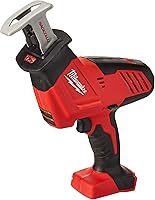
The corded Makita JR3051T and DeWalt DWE305 both have 12 Amp motors. The cordless Makita XRJ04Z uses Makita’s 18V LXT battery platform, and its battery is sold separately.
A motor rating or strokes-per-minute figure alone does not tell you which saw will cut faster in every material. Blade choice, the workpiece and the way you handle the saw all affect a cut.


Corded vs cordless reciprocating saw: which should you choose?
Pick corded for a steady supply of power near an outlet; pick cordless for freedom to move between cuts. Start with the room, yard or work area where you expect to use the saw most.
A corded saw needs a suitable outlet and a cord route that stays away from the blade and your feet. That can work well for repeated cuts in one area, but becomes awkward when you move around a large room or yard.
A cordless saw removes the cord from that work area. In return, you need a charged compatible battery, and the Makita XRJ04Z package is tool only.
If you already use Makita 18V LXT batteries, the cordless Makita can fit that tool platform. If you don't, include the cost and convenience of getting a compatible battery and charger in your decision.
For more on how these tools differ from other saw types, see types of reciprocating saws and multi-tools. If the project is a hand-tool cut in pipe or bolts, compare a reciprocating saw vs a hacksaw.
Which corded reciprocating saw fits home projects?
Choose the DeWalt DWE305 when its 4-position blade clamp suits your cuts; choose the Makita JR3051T for its longer listed stroke and higher maximum speed. Both are corded 12 Amp saws with variable speed triggers.
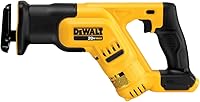
The DeWalt reaches up to 2,900 strokes per minute and has a 1-1/8 in stroke. Its 4-position blade clamp allows flush cutting, and its keyless, lever-action clamp supports blade changes.
The Makita JR3051T reaches up to 3,000 strokes per minute and has a 1-3/16 in stroke. It also has a tool-less blade change and a tool hook for securing the saw when it is not in use.
Those figures describe features, not a guarantee that one saw will finish every cut faster. Match the blade to the material, keep the shoe supported against the work where appropriate, and follow the saw’s manual.
When does a cord make sense at home?
A corded saw makes sense for remodeling, repairs or breakdown work centered near an outlet. It avoids planning cuts around battery charge, but you still need to manage the cord and keep it away from the cutting path.
For a fixed workbench or a few cuts in a garage, cord routing may be simple. For pruning or repairs across a yard, moving the cord can take more time and care than carrying a cordless tool.
Check your outlet and extension-cord requirements in the manual before starting. Keep the cord behind you and out of the cut, and stop if the tool or cord is damaged.
When is a cordless reciprocating saw worth it?
Choose cordless when you need to carry the saw between work areas or there is no practical outlet nearby. The Makita XRJ04Z has a 1-1/4 in stroke and reaches up to 2,800 strokes per minute.
Its variable speed trigger lets you control speed, and it has a tool-less blade change system. The listed weight is 8.3 lb with battery, while the battery itself is not included with this tool-only model.
Battery power can be convenient for quick repairs, outdoor cuts and work where a cord would cross a walkway. For longer jobs, have a charged compatible battery available and pause to swap or recharge when needed.
Consider the battery platform before buying. If you already own compatible Makita 18V LXT batteries, the XRJ04Z may fit your setup; otherwise, factor in the extra battery and charging equipment.
Which features matter most for your cuts?
Choose based on the cut you make, not just the power source. Stroke length, speed control, blade changes and blade position can make a practical difference to how a saw fits a home project.
The Makita XRJ04Z has the longest listed stroke here at 1-1/4 in. The JR3051T has a 1-3/16 in stroke, and the DeWalt DWE305 has a 1-1/8 in stroke.
All 3 models have a variable speed trigger. That gives you trigger control over saw speed, which can help you start a cut with more control.
The DeWalt’s 4-position blade clamp stands out if flush cutting is part of your plan. For a broader look at blade selection, read which reciprocating saw blade you should use.
How should you plan a safe home cut?
Secure the work, choose a blade for the material and keep the cord or battery clear of the cut. Read the saw’s manual before using it, especially for blade changes and any cut where you cannot see behind the workpiece.
A reciprocating saw can move the work as the blade travels back and forth. Support the material so it cannot shift, and keep your hands away from the blade path.
Check for wires, pipes and other hidden items before cutting into a wall or other enclosed area. If you cannot confirm what is behind the cut, stop and inspect from another direction.
Wear suitable eye protection and follow the manufacturer’s safety instructions. The OSHA hand and power tools guidance covers general precautions for using powered tools.
For safer handling basics, see how to properly use a reciprocating saw at home. If your project is a branch, compare the cut and access needs in our guide to reciprocating saws for pruning branches.
Which saw is the better fit for your home?
Pick the DeWalt DWE305 for corded flush-cut flexibility, the Makita JR3051T for its corded speed and stroke figures, or the Makita XRJ04Z when cordless mobility matters most. Your outlet access and battery setup should settle the choice.
Choose corded if most cuts happen near an outlet and you want to work without planning around battery charge. Choose cordless if carrying a saw between rooms or around the yard is a regular part of the job.
Explore the saw matchups and tool comparisons if another saw type may fit your project better. For cuts that need a shorter, more controlled tool, compare an oscillating tool vs a jigsaw.
| Product | Best for | Power | Speed | Stroke | Our score |
|---|---|---|---|---|---|
| Makita JR3051T 12 Amp Recip Saw | corded speed control | 12 Amp corded electric | Up to 3,000 strokes per minute | 1-3/16 in | 8.2 |
| Makita XRJ04Z 18V LXT Recip Saw | cordless mobility | 18V battery powered | Up to 2,800 strokes per minute | 1-1/4 in | 8.5 |
| DeWalt DWE305 12 Amp Corded Recip Saw | flush cuts | 12 Amp corded electric | Up to 2,900 strokes per minute | 8.9 |
Frequently asked questions
Is a corded or cordless reciprocating saw better for home use?
A corded saw suits work near a dependable outlet, while a cordless model is easier to carry around a home or yard. Think about where you cut most often and whether you already own batteries for the cordless tool.
Either way, choose the blade for the material and keep the work area clear.
Does a corded reciprocating saw have more power?
These examples have 12 Amp corded motors and one 18V cordless design, but those numbers alone don't tell you which saw will cut faster in every material. The Makita corded model reaches up to 3,000 strokes per minute, and the cordless Makita reaches up to 2,800.
Blade choice and the cut also matter.
Can I use a cordless reciprocating saw without a battery?
The Makita XRJ04Z is a tool-only model, and its 18V battery is sold separately. Check whether you have a compatible Makita 18V LXT battery before choosing it, and plan for charging or a spare battery if your work may outlast one charge.
Are corded reciprocating saws good for yard work?
A corded saw can handle yard work when the cut is close to a suitable outlet and the cord can stay safely clear of the blade, branches and walking path. For work spread across a yard, a cordless model avoids managing a long extension cord.
Use a blade made for the material.
What should I compare besides corded or cordless power?
Compare stroke length, strokes per minute, blade changes and features that fit your cuts. The DeWalt DWE305 has a 4-position blade clamp for flush cutting, while both Makita models have tool-less blade changes.
Check the tool manual for safe use and the right setup.