DeWalt Atomic vs XR Reciprocating Saw: Which Is Better? (October 2026)
Choose the DeWalt Atomic for a lighter, shorter one-handed saw, or the XR DCS384B for its 3,000 max SPM and vibration-reduction design. The compact XR DCS367B sits between them in length and offers a 4-position blade clamp.
On this page (7 sections)
- DeWalt Atomic vs XR: what is the main difference?
- Which DeWalt reciprocating saw fits your work?
- How do size and weight compare?
- Which saw has the better blade-change setup?
- What speed and cutting features set the XR models apart?
- Do these DeWalt saws include a battery?
- Which DeWalt Atomic vs XR saw should you buy?
Choose the DeWalt Atomic for a lighter, shorter one-handed saw, or the XR DCS384B for its higher stated no-load speed and vibration-reduction design. The compact XR DCS367B offers a middle option with a 4-position blade clamp.
The DCS369B Atomic is 12.5 inches front to back and 37% lighter than the DCS367 tool only. The DCS367B measures 14.5 inches, and the DCS384B adds a 1-1/8 inch stroke length and up to 3,000 max SPM no-load.
All 3 are cordless, brushless DeWalt reciprocating saws. Batteries and chargers are sold separately for the Atomic and DCS384B; the DCS367B is compatible with DeWalt 20V MAX batteries and chargers.
Our score weighs listed specs and features against what shoppers comparing DeWalt Atomic vs XR saws are likely to need.

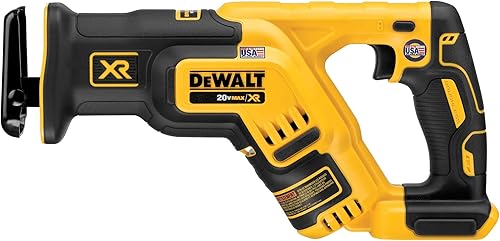
DeWalt Atomic vs XR: what is the main difference?
The Atomic DCS369B favors compact handling, while the XR DCS384B has the highest stated no-load speed and a vibration-reduction mechanism. The XR DCS367B is a compact alternative with a 4-position blade clamp.
The Atomic has a 12.5 inch front-to-back measurement. DeWalt describes it as 37% lighter than the DCS367 tool only, which makes it the clearest choice here when weight and reach into a confined space matter.
The DCS367B is 14.5 inches long and has a keyless 4-position blade clamp. That gives you several blade positions for approaching a cut, while its brushless motor, LED and variable trigger cover common jobsite needs.
The DCS384B is designed for demanding cutting jobs. Its 1-1/8 inch stroke, up to 3,000 max SPM no-load and counterbalance mechanism distinguish it from the two compact models.
Which DeWalt reciprocating saw fits your work?
Pick by the cuts and access you expect most often. A shorter body can help in a tight spot, while a longer list of heavy-duty features may matter more for repeated demolition work.
When should you choose the Atomic DCS369B?
Choose the Atomic when reducing tool weight and working in a compact space are your main priorities. Its one-handed format, 12.5 inch front-to-back size, pivoting shoe and LED suit jobs where you want a shorter tool body and added visibility.
The variable-speed trigger gives you speed control, and the tool-free blade release allows quick blade changes. The saw includes 2 blades and a belt hook, but the battery and charger are sold separately.
The Atomic is the clearest fit for pruning branches, cutting short sections of pipe or handling quick cuts where the tool's compact size is useful. For broader help choosing a saw by task, see our guide to what a reciprocating saw is good for.
When does the compact XR DCS367B make more sense?
Choose the DCS367B if the 4-position blade clamp is useful for reaching a cut from different angles. At 14.5 inches long, it stays compact while offering a brushless motor, an LED and variable trigger speed up to 2,900 SPM.
Its stated weight is 5.4 pounds, and the product description says it can deliver up to 2.5 times more runtime in a comparison using specified batteries and a prior saw. That runtime figure comes from that particular comparison, so it does not promise the same result for every battery or cutting task.
This model is a middle ground if the Atomic feels too small for your preferred grip or you want the DCS367B's blade-position choices. For a compact tool with a shorter body, compare it with our mini reciprocating saw guide.
When should you choose the XR DCS384B?
Choose the DCS384B when the stated stroke length, faster no-load speed and vibration-reduction design match your work. The brushless motor, variable trigger and pivoting shoe are aimed at demanding cutting and demolition applications.
Its counterbalance mechanism is designed to limit vibration. That design feature may be useful during repeated cuts, but it doesn't tell you how the saw will feel in your hands.
The DCS384B also has a keyless lever-action blade clamp and onboard LED. It is a more substantial option than the two compact models, so check the working clearance around your cut before choosing it for a cramped area.
For a broader comparison of cordless and corded power choices, see corded vs cordless reciprocating saws.
How do size and weight compare?
The Atomic has the shortest stated body and is described as lighter than the DCS367; the DCS384B has dimensions that suggest a larger overall form. These measurements use different formats, so check the tool's full dimensions against your work area.
The Atomic measures 12.5 inches front to back. Its stated weight is 3.13 pounds, and the 37% comparison is specifically against the DCS367 tool only.
The DCS367B measures 14.5 x 6 x 4 inches and is listed at 5.4 pounds. The DCS384B measures 19.3 x 4.19 x 7.38 inches and weighs 4.5 pounds.
Weight and dimension figures can be reported differently across models. Use them as a starting point, then consider whether you will use the saw with a battery attached and whether you need to work between studs or against a wall.
Which model fits between studs?
The DCS367B is explicitly described as a compact saw that fits between studs and other tight spots. The Atomic's shorter front-to-back length may also help with access, but its dimensions alone don't guarantee fit in every framing layout.
The DCS384B is the longest overall by its listed dimensions. Measure from the cut line to nearby framing, piping or other obstructions, and leave enough room to move the saw and blade safely.
Which saw has the better blade-change setup?
The DCS367B offers 4 blade positions, while the Atomic and DCS384B use quick, tool-free or keyless blade-release designs. Your choice depends on whether changing blade angle is more useful than a simple release.
The DCS367B's keyless 4-position blade clamp lets you change blade orientation. This may help when the saw approaches a cut from a restricted angle.
The Atomic uses a tool-free blade release for quick changes. The DCS384B has a keyless lever-action clamp, also designed for quick blade changes.
Choose a blade suited to the material and cut. Our guide to which reciprocating saw blade to use explains how blade choice affects wood, metal and demolition cuts.
What speed and cutting features set the XR models apart?
The DCS384B has the highest stated no-load speed at 3,000 max SPM, followed by the DCS367B at up to 2,900 SPM. The Atomic description states up to 2,800 strokes per minute.
All 3 saws have variable-speed triggers, so you can adjust speed through the trigger rather than relying on a single fixed setting. The DCS384B also has a stated 1-1/8 inch stroke length, while the DCS367B has the same stated stroke length.
The product information does not give a matching stroke-length figure for the Atomic. Avoid treating a higher no-load speed as a guarantee of faster cutting in every material; blade choice, pressure, battery and workpiece all affect the result.
For metal, use a blade made for the material and support the work securely. Our guide to reciprocating saws for cutting metal covers blade and tool choices for that job.
Do these DeWalt saws include a battery?
The Atomic and DCS384B are tool-only purchases, and the DCS367B's included components list the saw without a battery or charger. Factor in a compatible battery and charger if you don't already own them.
The Atomic's components include the DCS369 saw, 2 blades and a belt hook. The DCS384B includes a wood-cutting reciprocating saw blade and bare tool.
The DCS367B is described as compatible with DeWalt 20V MAX batteries and chargers. Check what comes with the exact kit you are buying, since these product names refer to tool-only versions.
If you're choosing a platform for the first time, account for the battery and charger as part of the setup. Don't assume a bare tool includes either one.
Which DeWalt Atomic vs XR saw should you buy?
Choose the Atomic for the shortest stated body and lighter one-handed handling, the DCS367B for its 4-position clamp and compact framing access, or the DCS384B for its 1-1/8 inch stroke and 3,000 max SPM no-load rating. Match the saw to the clearance and cut types you face most.
The Atomic is the straightforward pick for light, compact work and quick changes. The DCS367B balances compact access with blade-position flexibility, while the DCS384B is the one to consider for demanding cuts where its stated cutting features matter.
Compare these with other form factors in our reciprocating saw vs jigsaw guide. If you already know the cut is best handled by a reciprocating saw, choose the model whose size and blade setup fit the work.
FAQ
Is the DeWalt Atomic better than XR?
The Atomic is a better fit when you prioritize a short, lighter one-handed saw.
The XR DCS367B adds a 4-position blade clamp, while the DCS384B has a 1-1/8 inch stroke and 3,000 max SPM no-load. “Better” depends on access, cutting demands and the features you will use.
Is DeWalt Atomic the same as XR?
Atomic and XR are DeWalt product lines, and these models differ in size and features.
The Atomic DCS369B is 12.5 inches front to back and one-handed. The XR options here are the compact DCS367B and the DCS384B, with different blade clamps and cutting features.
Which DeWalt reciprocating saw is best for tight spaces?
The DCS367B is described as fitting between studs and other tight spots, and its 14.5 inch length gives you a compact option.
The Atomic is shorter at 12.5 inches front to back. Measure the space around your cut, since clearance depends on the work angle and nearby obstacles.
Are the DeWalt Atomic and XR saws brushless?
Yes. The DCS369B Atomic, DCS367B XR and DCS384B XR all have brushless motors.
The models still differ in body size, blade clamp, stated speed and other features, so brushless construction alone won't tell you which one fits your work.
Frequently asked questions
Is the DeWalt Atomic or XR reciprocating saw smaller?
The Atomic DCS369B is the shortest of these options at 12.5 inches front to back. The XR DCS367B is 14.5 inches long, while the DCS384B is listed with overall dimensions of 19.3 x 4.19 x 7.38 inches.
Compare the clearance where you need to cut.
Which DeWalt reciprocating saw is lighter?
The Atomic DCS369B is described as 3.13 pounds and 37% lighter than the DCS367 tool only. The DCS367B is specified at 5.4 pounds, while the DCS384B is listed at 4.5 pounds.
Confirm whether the weight comparison you need includes a battery.
What is the difference between the DCS367B and DCS384B?
The compact DCS367B has a 4-position blade clamp and a variable trigger up to 2,900 SPM. The DCS384B has a 1-1/8 inch stroke, a 3,000 max SPM no-load trigger and a counterbalance designed to limit vibration.
Choose by the features your cuts call for.
Do DeWalt Atomic and XR reciprocating saws use the same battery?
The DCS367B is described as compatible with all DeWalt 20V MAX batteries and chargers. The DCS369B and DCS384B are also 20V MAX tools, but check the exact battery and charger compatibility for your setup before ordering.


