Milwaukee Sawzall vs Hackzall: Which One to Buy (October 2026)
Choose the M18 FUEL Sawzall for a full-size grip and the M18 FUEL Hackzall for one-handed control. The Hackzall's compact design suits tight or overhead cuts, while the Sawzall gives you a standard reciprocating saw layout.
On this page (8 sections)
- Milwaukee Sawzall vs Hackzall: which should you buy?
- Which Milwaukee saw is easier to control?
- Does the Sawzall or Hackzall cut faster?
- Which saw is better for cutting branches?
- Which model gives you more speed control?
- Do you need the M18 FUEL Super Sawzall?
- What should you check before buying?
- Milwaukee Sawzall vs Hackzall: which one fits your work?
Choose the M18 FUEL Sawzall for a full-size grip and the M18 FUEL Hackzall for one-handed control. In this Milwaukee Sawzall vs Hackzall comparison, the best fit depends on the space around your cut and how you want to hold the tool.
The Hackzall is built around one-handed use, while the Sawzall gives you a standard reciprocating saw layout. Both are cordless M18 tools, and the models here are bare tools without a battery or charger.


Milwaukee Sawzall vs Hackzall: which should you buy?
Buy the Hackzall for compact access and the Sawzall for full-size handling. Their different shapes matter more to most DIY cuts than the Milwaukee names do.
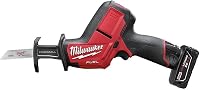
The M18 FUEL Hackzall 2719-20 has a one-handed design and a pivoting shoe. Its listed speed is up to 4,500 rpm, and its stroke length is 7/8 in.
The M18 FUEL Sawzall 2821-20 has a lever-actuated blade clamp and built-in LED light. The metal-reinforced battery connection is designed to improve durability and battery retention.
If you want a longer stroke and speed adjustments, consider the M18 FUEL Super Sawzall. It has a 1-1/4 in stroke, a variable speed trigger and a 5-speed dial.
Which Milwaukee saw is easier to control?
The Hackzall is the more compact choice for one-handed control, while the Sawzall gives you a full-size grip. Pick the layout that lets you brace the work and keep the blade aligned.
Milwaukee describes the Hackzall as a one-handed design. It is intended to offer more control and versatility than a standard reciprocating saw, and its pivoting shoe helps maintain contact with the workpiece.
That compact form can help when a cut is overhead or tucked into a narrow opening. One-handed design doesn't mean every cut is safe to make with one hand; support the workpiece and follow the manual's grip and safety instructions.
A full-size Sawzall is a practical choice when you have room to hold and guide a standard reciprocating saw. If tight access is the bigger concern, see our guide to mini reciprocating saws for tight spots.
Milwaukee M18 Sawzall vs Hackzall for overhead work
The Hackzall is the more compact option for overhead cuts, but the right blade and secure footing still matter. Keep the tool under control and avoid cutting above your reach.
The Hackzall's one-handed design is aimed at tight spaces and overhead applications. Its pivoting shoe can help maintain contact as you guide the saw.
Overhead cutting can tire your arm and make it harder to keep the blade steady. Use a stable platform, clear the area below the cut and reposition yourself when you can't maintain control.
Does the Sawzall or Hackzall cut faster?
The product details don't guarantee a direct speed winner between these 2 tools. The Hackzall's 4,500 rpm and 7/8 in stroke are not a head-to-head cutting-time comparison with the Sawzall.
Blade choice, material, cut angle, workpiece support and pressure all affect cutting. A blade made for wood won't be the right pick for metal, and forcing a dull or mismatched blade can make a cut harder to control.
The Hackzall's pivoting shoe is designed for steady contact, while the Sawzall's lever-actuated clamp speeds up blade changes. Consider those features as part of your work routine rather than treating the listed speed as a promise of faster real-world cuts.
The Super Sawzall gives you a 1-1/4 in stroke and a 5-speed dial. Those features may suit jobs where you want a longer stroke and control over speed, but they don't prove it will be faster for every material.
Which saw is better for cutting branches?
Choose based on reach and control, then fit a pruning blade to the branch. The Hackzall's one-handed form can help in tight spaces, while a full-size saw may be easier to guide when you have room to brace it.
A reciprocating saw can remove branches, but it is not a substitute for safe tree work. Keep the blade clear of your body, watch for spring tension in limbs, and avoid cutting branches that could fall onto people, buildings or power lines.
For regular yard work, compare the blade options and saw balance against the size of branches you plan to cut. Our guide to choosing a reciprocating saw for pruning branches walks through those details.
Which model gives you more speed control?
The Super Sawzall offers the clearest speed adjustment, with a variable trigger and 5-speed dial. The Sawzall and Hackzall details here don't list an equivalent dial.
More speed settings can help you adapt your pace to the material and blade. Start with a controlled cut and follow the blade maker's guidance, especially when the workpiece can vibrate or move.
The Super Sawzall also has an adjustable shoe, tool-free blade clamp and integrated LED light. Those features make it a separate full-size option for buyers who want more adjustment than the basic Sawzall comparison suggests.
Do you need the M18 FUEL Super Sawzall?
Choose the Super Sawzall if its longer stroke and speed controls match the jobs you do. For tight access, the Hackzall remains the smaller one-handed choice.
The Super Sawzall's 1-1/4 in stroke removes more material with each stroke, according to its product details. Its 5-speed dial and variable speed trigger let you adjust speed, and the adjustable shoe can extend blade life.
It weighs 8.8 lb, while the Hackzall is listed at 1.8 kg. Those units are different, so check the exact tool weight and how it feels in your planned work position before buying.
The Super Sawzall is also a bare tool. If you already have M18 batteries, confirm that your battery setup fits your needs; otherwise, account for the battery and charger separately.
What should you check before buying?
Check your battery system, grip preference and blade needs before choosing. Each model here is sold without a battery and charger, so a bare tool is only a useful buy if you have a compatible setup or plan to get one.
The Hackzall and Super Sawzall are identified as M18 tools. The standard Sawzall details also describe a battery-powered bare tool, so verify compatibility with your existing M18 batteries before ordering.
Think about the cuts you make most. A one-handed design may help in a narrow opening, while a full-size tool can be easier to guide with two hands when space allows.
Match the blade to the material. Our guide to which reciprocating saw blade to use explains how blade choice affects wood, metal and other cuts.
Milwaukee Sawzall vs Hackzall: which one fits your work?
Pick the Hackzall if compact one-handed control is your priority; pick the Sawzall for a standard full-size reciprocating saw. Choose the Super Sawzall when a longer stroke and speed adjustment are the deciding features.
The Hackzall's shape suits tight and overhead access, while the standard Sawzall includes a lever-actuated clamp and built-in LED. For more Milwaukee options, compare our best Milwaukee Sawzall and Hackzall picks.
If you're deciding between hand and power tools for pipes or bolts, read our reciprocating saw vs hacksaw comparison before you buy.
Frequently asked questions
What is the main difference between a Milwaukee Sawzall and Hackzall?
The main difference is the grip and form: the Hackzall has a one-handed design, while the Sawzall uses a standard full-size reciprocating saw layout. The Hackzall suits tight or overhead cuts where compact control helps.
Choose the Sawzall for a familiar two-handed grip and broader handling.
Is the M18 Hackzall good for pruning?
The M18 Hackzall can suit pruning when its compact one-handed design helps you reach branches, but use a pruning blade made for the material and branch size. Support the work safely and keep the shoe steady.
For more on tool choice, see our guide to reciprocating saws for pruning.
Should I buy the Milwaukee Super Sawzall or Hackzall?
Choose the Super Sawzall for its 1-1/4 in stroke, adjustable shoe and 5-speed dial. Choose the Hackzall for its one-handed design and compact access in tight spaces.
The right choice depends on whether reach and control or a longer stroke and speed adjustment matter more.
Do these Milwaukee saws include a battery and charger?
The 3 saws here are bare tools, so a battery and charger aren't included. The Hackzall and Super Sawzall are compatible with M18 batteries, and the Sawzall has a metal-reinforced battery connection.
Check your existing battery system before choosing.
Can I use a reciprocating saw to cut metal?
Yes, a reciprocating saw can cut metal with a blade suited to the metal's type and thickness. Secure the workpiece, wear eye protection and follow the saw's manual.
Our guide to reciprocating saws for cutting metal covers blade and tool choices.