9 Best Reciprocating Saws for Cutting Metal (October 2026)
The best reciprocating saws for cutting metal include the Milwaukee M18 FUEL Sawzall for cordless metal work, the DeWalt DCS367 XR Compact Recip Saw for tight metal cuts, and the Makita XRJ05Z Brushless Recip Saw for adjustable speed.
On this page (4 sections)
The Milwaukee M18 FUEL Sawzall is our top reciprocating saw for cutting metal, thanks to its lever-actuated blade clamp and built-in LED. For steady work near an outlet, choose a corded model such as the DeWalt DWE305 or Makita JR3051T.
Metal cutting depends on the blade as much as the saw. Match the blade to the metal's type and thickness, secure the work, and keep the saw shoe supported when the cut allows it.
Use our guide to which reciprocating saw blade to use to choose a blade before you start. If you're deciding between a power saw and hand tool for pipe, see reciprocating saw vs hacksaw.
Our picks at a glance
-
1

-
2
-
3

- 4
 Check it
DeWalt DWE305 12 Amp Corded Recip Saw
Best for corded cutting - 5
 Check it
Milwaukee M18 FUEL Super Sawzall
Best for heavy metal work - 6
 Best for controlled cordless cutsCheck it
- 7
 Check it
Skil SPT44A-00 13 Amp Recip Saw
Best for vibration control - 8
 Check it
Makita JR3051T 12 Amp Recip Saw
Best for a metal blade included - 9
 Check it
DeWalt FlexVolt DCS389B Recip Saw
Best for FlexVolt users
How we chose reciprocating saws for cutting metal
We compared the listed features that affect metal cutting: power source, speed control, blade changes, shoe design and metal blade inclusion. Our score weighs specs and features against what you're shopping for.
The Makita JR3051T stands out for including a metal-cutting blade. The Milwaukee M18 FUEL Sawzall earns the top score for its quick lever clamp, built-in light and cordless design.
A reciprocating saw can make rough, fast cuts, but it does not replace careful setup. Use a blade made for the material, clamp the work securely and wear eye and hearing protection.
| Product | Best for | Our score |
|---|---|---|
| Milwaukee M18 FUEL Sawzall | cordless metal work | 9.1 |
| DeWalt DCS367 XR Compact Recip Saw | tight metal cuts | 9.0 |
| Makita XRJ05Z Brushless Recip Saw | adjustable speed | 8.9 |
| DeWalt DWE305 12 Amp Corded Recip Saw | corded cutting | 8.9 |
| Milwaukee M18 FUEL Super Sawzall | heavy metal work | 8.8 |
| DeWalt DCS384B XR Recip Saw | controlled cordless cuts | 8.4 |
| Skil SPT44A-00 13 Amp Recip Saw | vibration control | 8.3 |
| Makita JR3051T 12 Amp Recip Saw | a metal blade included | 8.2 |
| DeWalt FlexVolt DCS389B Recip Saw | FlexVolt users | 8.2 |
The best reciprocating saws for cutting metal
The best saw depends on access, power and blade needs. These picks run from a cordless general-purpose option to corded saws and specialized choices for tight access or vibration control.
Milwaukee M18 FUEL Sawzall: Best for cordless metal work
- Lever-actuated blade clamp
- Built-in LED light
- Brushless cordless tool
A lever-actuated clamp supports quick blade changes, and the built-in LED lights the work surface. It is a cordless bare tool, so you need a compatible M18 battery and charger.
Pros
- Fast, easy blade changes
- Built-in work light
- Metal reinforced battery connection
Cons
- Battery and charger not included
The Milwaukee M18 FUEL Sawzall is a strong cordless choice when you need to move around a work area without a power cord. Its lever-actuated blade clamp makes blade changes straightforward, which helps when a project calls for different blade types.
A built-in LED lights the work surface while cutting. The metal-reinforced battery connection is designed to improve battery retention and durability over the tool's life.
This is a bare tool, so plan on a compatible M18 battery and charger. Choose it when you already use that battery system or value cordless access around the workpiece.
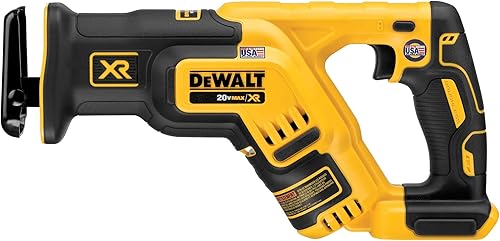
DeWalt DCS367 XR Compact Recip Saw: Best for tight metal cuts
- Compact 14.5 in length
- Keyless 4-position blade clamp
- Variable speed trigger
Its compact body is designed to fit between studs and into tight spots. The 4-position clamp and variable speed trigger offer useful control when access around metal is limited.
Pros
- Compact body for tight spaces
- Four blade positions
- Built-in LED
Cons
- Battery and charger sold separately
The DeWalt DCS367 XR Compact Recip Saw is designed for tight work areas. Its 14.5 in compact length can fit between studs and in other restricted spots, where longer saws may be awkward to position.
A keyless 4-position blade clamp gives you options for blade orientation, and the variable speed trigger helps control the cut. The built-in LED can light a dim work area.
This cordless tool works with DeWalt 20V MAX batteries, but the battery and charger are sold separately. Consider it when access around the metal matters more than having a corded power source.
Makita XRJ05Z Brushless Recip Saw: Best for adjustable speed
- Two speed ranges
- Tool-less blade change
- Variable speed trigger
Two speed ranges and a variable speed trigger give you options for different cuts. The cordless bare tool works with Makita 18V LXT batteries, which are sold separately.
Pros
- Two speed ranges
- Tool-less blade changes
- Includes a 6 in, 6TPI blade
Cons
- Battery and charger not included
Makita's XRJ05Z offers two speed ranges, with a variable speed trigger for further control. It also has a tool-less blade change system and includes a 6 in, 6TPI blade.
The saw is a tool-only cordless model in Makita's 18V LXT system. The battery and charger are not included, so check your existing tools and batteries before choosing it.
Its speed options may suit buyers who move between different materials and want to adjust the pace. For metal, pair it with a blade specified for the metal and its thickness.
DeWalt DWE305 12 Amp Corded Recip Saw: Best for corded cutting
- 12 amp motor
- Variable speed trigger
- 4-position blade clamp
This corded saw avoids battery changes during a job. Its 4-position clamp supports flush cutting, while the variable speed trigger lets you control the tool's speed.
Pros
- Corded electric power
- Four blade positions
- Keyless lever-action clamp
Cons
- Requires access to a power outlet
The DeWalt DWE305 is the corded pick for buyers who want to work without managing a battery. Its 12 amp motor is designed for heavy-duty applications, and the variable speed trigger lets you control speed as the blade enters the material.
The 4-position blade clamp supports flush cutting and adds blade positioning options. Its keyless lever-action clamp also makes blade changes quick.
Choose this saw for a fixed work area with outlet access. The cord can limit movement, so plan its route before cutting around metal stock or pipe.
Milwaukee M18 FUEL Super Sawzall: Best for heavy metal work
- 1-1/4 in stroke length
- Variable speed trigger and 5-speed dial
- Adjustable shoe
The longer stroke and 5-speed dial make this a feature-rich option for demanding cuts. It is an M18 bare tool, and the battery is not included.
Pros
- Five-speed dial
- Adjustable shoe
- Tool-less blade changes
Cons
- Battery and charger not included
The Milwaukee M18 FUEL Super Sawzall has a 1-1/4 in stroke length and combines a variable speed trigger with a 5-speed dial. Those controls give you several ways to set the pace for different cuts.
An adjustable shoe helps extend blade life, and the tool-less clamp supports blade changes without an extra wrench. The integrated LED helps illuminate the work area.
This is an M18 bare tool with no battery or charger included. Consider it for demanding cuts if you already have compatible batteries and want the extra speed-setting options.
DeWalt DCS384B XR Recip Saw: Best for controlled cordless cuts
- Variable speed trigger up to 3,000 max SPM
- Pivoting shoe
- Onboard LED
The variable speed trigger and pivoting shoe give you ways to adjust the cut and maintain contact with the material. This cordless tool is sold without a battery or charger.
Pros
- Pivoting shoe
- Keyless lever-action blade clamp
- Onboard LED
Cons
- Battery and charger sold separately
The DeWalt DCS384B pairs a variable speed trigger with a pivoting shoe that allows several points of contact with the material. Its maximum no-load speed is 3,000 SPM.
The keyless lever-action blade clamp makes blade changes simple, while the onboard LED adds light near the cut. The tool is sold without a battery or charger.
Choose it if you want a cordless saw with an adjustable shoe and speed control. Use a metal-rated blade suited to the work, since the included blade is described as a wood-cutting blade.
Skil SPT44A-00 13 Amp Recip Saw: Best for vibration control
- 13 amp corded motor
- Variable speed trigger
- Buzzkill vibration control
SKIL says its Buzzkill technology suppresses vibration up to 35% better than the competition. A variable speed trigger helps you adjust speed for specialized materials.
Pros
- Corded electric power
- Variable speed trigger
- Buzzkill vibration control
Cons
- Requires access to a power outlet
SKIL's SPT44A-00 is a corded 13 amp saw with a variable speed trigger. SKIL says its Buzzkill technology suppresses vibration up to 35% better than the competition, which may appeal if vibration is a concern during repeated cuts.
The tool-less blade clamp holds the blade without a separate tool. The oversize trigger allows cutting in multiple positions.
This model needs an outlet, and the supplied product details do not identify a metal blade as included. Choose a suitable blade for the specific metal before beginning work.
Makita JR3051T 12 Amp Recip Saw: Best for a metal blade included
- 12 amp corded motor
- Variable speed trigger
- Includes a 6 in, 18TPI metal cutting blade
This corded saw includes a 6 in metal cutting blade with 18 teeth per inch. Its variable speed trigger lets you match the tool's speed to the cut.
Pros
- Metal cutting blade included
- Tool-less blade changes
- Corded electric power
Cons
- Requires access to a power outlet
The Makita JR3051T includes a 6 in, 18TPI metal-cutting blade, giving it a useful starting point for metal work. Its 12 amp corded motor reaches up to 3,000 strokes per minute.
The tool-less blade change makes swapping blades easier, and a variable speed trigger helps you adjust the cutting pace. The tool hook can secure the saw when it is not in use.
Choose this model if you want a corded saw and a metal blade in the box. Check the blade's material guidance against the stock you're cutting.
DeWalt FlexVolt DCS389B Recip Saw: Best for FlexVolt users
- Cordless 60V MAX tool
- Variable speed trigger up to 3,000 SPM
- Pivoting shoe
The cordless design and pivoting shoe suit work where a cord would get in the way. The bare tool needs a compatible battery and charger, sold separately.
Pros
- Cordless tool
- Pivoting shoe
- Built-in LED
Cons
- Battery and charger sold separately
The DeWalt FlexVolt DCS389B is a cordless 60V MAX saw with a variable speed trigger up to 3,000 SPM. Its pivoting shoe provides leverage for different applications, and an LED helps illuminate dim work areas.
A keyless lever-action clamp supports quick blade changes. The tool-only setup means you'll need a compatible battery and charger, sold separately.
Consider it if you already use DeWalt FlexVolt tools and want cordless mobility. Pair it with a metal blade suited to your material and cut.
What matters when cutting metal with a reciprocating saw?
A suitable blade and stable workpiece matter most when cutting metal. The saw's speed control, shoe contact and power source affect how manageable the cut feels.
Which blade works for metal cutting?
Choose a blade labeled for the metal you're cutting, then match its tooth pattern to the material thickness. For example, the Makita JR3051T includes an 18TPI metal-cutting blade, while the Makita XRJ05Z includes a 6TPI blade that is not identified as a metal blade.
Do not assume a blade that fits the saw is suitable for every metal. See our reciprocating saw blade guide for more selection tips.
How should you set up the cut?
Clamp the work so it cannot shift, and support the saw shoe against the material where possible. Start at a controllable speed, keep your hands clear of the blade path and let the blade do the work.
Wear eye protection against chips and hearing protection around power tools. Follow the saw and blade instructions, especially when cutting coated, painted or unknown materials.
Should you choose corded or cordless?
Choose corded if you work near an outlet and want to avoid battery swaps. Choose cordless if you need to move around the work or work away from power, while accounting for battery compatibility and charge.
Our corded vs cordless reciprocating saw guide walks through the tradeoffs for home use. Also keep the cord clear of the cut path and sharp metal edges.
Which reciprocating saw should you choose for metal?
Choose the Milwaukee M18 FUEL Sawzall for a cordless general pick with a lever clamp and LED. Choose the Makita JR3051T if an included metal-cutting blade and corded power suit your setup.
For tight access, the compact DeWalt DCS367 is the clearest fit. If the job is small detail work rather than a longer cut, read whether an oscillating tool can cut metal before choosing a saw.
Our top 3 picks at a glance
-
1
-
2
-
3
Frequently asked questions
What blade should I use to cut metal with a reciprocating saw?
Use a blade made for the metal and cut thickness. A blade with more teeth per inch usually suits thinner metal, while thicker stock may call for a coarser blade.
Check the blade maker's material guidance and the saw's instructions before cutting.
Our guide to choosing a reciprocating saw blade explains the main blade types.
Can a reciprocating saw cut metal pipe?
Yes, a reciprocating saw can cut many metal pipes with a suitable metal-cutting blade. Secure the pipe so it cannot roll, keep the shoe against the work when practical and use a speed you can control.
For a slower hand-tool option, compare it with a hacksaw for pipe and bolts.
Is a corded or cordless reciprocating saw better for metal?
A corded saw avoids battery changes but needs access to an outlet. A cordless model is easier to move around a worksite, though you need a charged compatible battery.
Choose based on where you cut and how long the job runs.
Our corded vs cordless reciprocating saw guide compares those tradeoffs.
Can an oscillating tool cut metal?
Yes, an oscillating tool with a blade suited to the metal can handle smaller cuts, trim and detail work. A reciprocating saw is usually a better fit for longer cuts through pipe or stock.
See our guide to cutting metal with an oscillating tool for the jobs that tool can handle.


