How to Properly Use a Reciprocating Saw at Home
To properly use a reciprocating saw, fit a blade for the material, secure the work, brace the shoe against it, and start slowly. Keep both hands on the tool when possible, let the blade cut without forcing it, and stop if the work shifts or the blade binds.
On this page (7 sections)
To properly use a reciprocating saw, fit a blade for the material, secure the work, brace the shoe against it, and start slowly. Keep a firm grip, let the blade cut without forcing it, and stop if the work shifts or the blade binds.
A reciprocating saw is useful for rough cuts, demolition, and areas where a circular saw may not fit. Its fast back-and-forth motion can also make it harder to control, so setup and blade choice matter.
What should you do before using a reciprocating saw?
Read the saw's manual, choose the right blade, and secure the work before powering on. Check that the blade is undamaged and installed as the manufacturer directs.
Disconnect power or remove the battery before changing a blade. Keep your hands away from the blade clamp, since the blade may be hot after a cut.
Wear safety glasses and hearing protection. Secure loose clothing, tie back long hair, and use gloves suitable for the job.
Check the manual for any other protective gear it recommends.
Inspect both sides of the material before cutting. Look for wires, pipes, fasteners, or other hidden items, and make sure the blade path won't reach a person, wall, or surface behind the work.
How do you choose the right blade?
Use a blade made for the material and cut you need. Wood, metal, and mixed demolition work call for different tooth patterns and blade designs.
A coarse blade can cut wood quickly, while a finer tooth pattern is generally better suited to metal. A blade that's too short may not reach through the material; one that's too long can hit objects behind it.
Our guide to which reciprocating saw blade to use explains how to match blade type to common materials and jobs. For a range of wood and metal options, the DEWALT 12-piece bi-metal set includes blades in different sizes and tooth patterns.
Choose a blade long enough to pass through the work without striking anything behind it. Don't assume every blade in a set suits every material.
How do you hold and start the saw?
Hold the saw firmly, place its shoe against the work, and start at a low speed. Keep fingers away from the blade path and maintain a stable stance.
Use two hands when the saw's design and the task allow it. If one hand is needed to steady a tool or material, stop and rethink the setup; the work should be secured so you don't have to hold it near the cut.
Start the motor before the blade touches the material, then ease the blade into the cut. Avoid pushing hard.
Let the tool's motion do the work, and increase trigger pressure only when the blade is tracking steadily.
Can a compact reciprocating saw help in tight spots?
A compact saw can fit into tighter spaces than a full-size tool, but you still need room to control it safely. Check the blade path and your grip before starting.
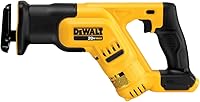
The DeWalt DCS367 XR Compact Recip Saw is 14.5 in long and has a 4-position blade clamp. DEWALT says its brushless motor provides up to 2.5 times the runtime compared with the stated earlier model and battery setup.
This tool is sold without a battery or charger. Choose it if you already use compatible DEWALT 20V MAX batteries; otherwise, check what power source the saw requires before buying.
How do you make a controlled cut?
Keep the shoe against the work and guide the blade along your mark without twisting it. A steady cut usually comes from firm support, not extra force.
Clamp loose material to a stable surface. For pipe, support both sides of the intended cut so the pieces don't pinch the blade as they separate.
As the blade advances, adjust the shoe's position while keeping it supported. Pause if the blade bends, chatters, or starts to bind.
Release the trigger, wait for the blade to stop, and reposition the work or tool.
For cutting PVC, see our step-by-step guide to how to cut PVC pipe with a reciprocating saw. It covers pipe support and cut control for that specific job.
Is a cordless reciprocating saw suitable for home cuts?
A cordless saw can be convenient when you need to move around or work away from an outlet. Check that its battery is charged and that you can manage the tool comfortably.
The Black+Decker BDCR20C Recip Saw Kit includes a 20V battery and charger, plus a tool-free blade change and pivoting shoe. BLACK+DECKER describes its saw as having a variable speed trigger and electric brake.
A cordless tool still needs a blade suited to the material and a stable work setup. If the cut is awkward or overhead, pause and change your position rather than stretching to reach it.
How do you cut different materials safely?
Match the blade to the material, and check what lies behind the cut before starting. Keep the work secured and use slow, controlled trigger pressure.
For wood, check for nails or screws and choose a wood or demolition blade that can handle the material. For metal, use a metal-cutting blade, secure the work close to the cut, and let the blade do the work.
Don't use a reciprocating saw on concrete or other masonry unless the saw and blade maker specifically allow that use. For roots or branches, check the ground and surrounding area for hazards before cutting.
Our guide to what a reciprocating saw is good for covers common jobs and when another tool may fit better. If you're new to the tool's motion, how a reciprocating saw works explains what the blade does as you cut.
What should you do when the cut is finished?
Release the trigger, wait for the blade to stop, and set the saw down safely. Disconnect power or remove the battery before clearing debris or changing blades.
Let a hot blade cool before touching it. Remove scraps only after the tool is off, and check that the cut pieces can't fall or shift.
Inspect the blade for damage and replace it if it is bent, cracked, or too dull for the next job. Store the saw and blades where children can't reach them.
Which steps matter most when using a reciprocating saw?
Start with the correct blade and a secure workpiece. Keep the shoe braced against the material, use a firm grip, and let the saw cut at its own pace.
Choose a compact tool if access is the main challenge, such as the DeWalt DCS367 XR Compact Recip Saw. Choose the Black+Decker BDCR20C Recip Saw Kit if a battery and charger are useful, and consider the DEWALT blade set if you need blades for several common materials.
Stop and reset if the blade binds, the work moves, or you lose a stable position. For more blade guidance, see which reciprocating saw blade to use.
Frequently asked questions
How do you use a reciprocating saw for the first time?
Choose a blade made for the material, unplug or remove the battery while fitting it, and clamp the work so it cannot move. Hold the saw firmly, rest its shoe against the material, and start at a low trigger speed.
Let the blade reach the cut before increasing speed.
Should the shoe touch the material when cutting?
Yes, keep the saw's shoe firmly against the material when the cut allows it. The shoe helps steady the tool and limits blade movement.
Reposition it as the cut advances, and stop if the material shifts or the blade begins to bind.
How do you keep a reciprocating saw from jumping?
Secure the work, brace the shoe against it, and begin with light trigger pressure. Keep a firm grip and avoid pushing hard, since force can make the blade bend or catch.
If the saw jumps, release the trigger and reset your position before continuing.
What safety gear should you wear with a reciprocating saw?
Wear safety glasses and hearing protection, and use work gloves suited to the task. Secure loose clothing and tie back long hair.
Check the tool manual for required protective gear, and keep hands clear of the blade path and the workpiece's far side.