What Is a Reciprocating Saw Good For?
A reciprocating saw is good for fast, rough cuts in wood, branches, plastic pipe, and metal, especially during demolition or when access is tight. Match the blade to the material and use a different saw when a clean, straight finish matters.
On this page (9 sections)
- What jobs is a reciprocating saw good for?
- Is it useful for demolition?
- Can you use one for pruning branches?
- Can a reciprocating saw cut pipe and metal?
- Is a reciprocating saw good for precise cuts?
- When should you choose another tool?
- What should you look for in a saw for home jobs?
- How do you use a reciprocating saw more safely?
- What is a reciprocating saw good for in the end?
A reciprocating saw is good for fast, rough cuts in wood, branches, plastic pipe, and metal, especially during demolition or when access is tight. Choose the right blade for the material, and use a different saw when you need a clean, controlled finish.
Its narrow blade moves forward and backward, so you can start cuts in awkward spots and reach between framing members. That flexibility makes it useful for removal work, but the action can be hard to guide precisely.
What jobs is a reciprocating saw good for?
A reciprocating saw suits demolition, pruning, and cuts in tight spaces. Its main strength is removing or shortening material where a neat edge matters less than getting through the job.
Common uses include:
- Cutting wood framing, trim, or old boards during renovation.
- Trimming branches with a pruning blade.
- Cutting plastic pipe to length.
- Cutting metal pipe, fasteners, or sheet with a metal cutting blade.
- Making flush cuts near a wall or floor with a blade and position that allow it.
A blade that fits the material matters more than the tool’s name. Our guide to which reciprocating saw blade to use explains how blade type affects the cut.
Is it useful for demolition?
Yes. A reciprocating saw is useful for taking apart wood and other materials in place, where carrying a larger saw into the cut may be difficult.
It can cut through framing or trim after you check what is behind or inside the work.
Before cutting a wall, floor, or ceiling, locate electrical wiring, plumbing, and other hidden services. Use a suitable blade, keep the work steady, and stop if the blade binds or the material shifts.
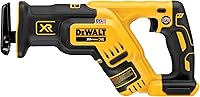
For cuts between studs or close to a surface, a compact saw can be easier to place. The DeWalt DCS387B is 14 in long and has a 4-position blade clamp for different blade positions and flush cutting.
A reciprocating saw’s blade can flex, so it may leave a rough edge or wander away from a line. If the visible face needs a clean cut, use a saw designed for straighter cuts and finish work.
Can you use one for pruning branches?
Yes, a reciprocating saw can prune branches when the blade is made for wood and the cut is within your control. A pruning blade’s coarse teeth can clear wood chips as it cuts through a branch.
The EZARC 12 in pruning blades have an arc edge, 6 teeth per inch, and are described for wet wood, dry wood, green timber, and firewood. EZARC gives a cutting capacity of up to 250 mm in diameter.
Support the branch so it doesn’t twist or pinch the blade. Avoid overhead cuts and limbs that could fall toward you; a pole saw or help from a qualified tree worker may suit those situations better.
Read the guide to reciprocating saws for pruning branches for saw options focused on yard work. If you’re comparing tool types, types of reciprocating saws and multi-tools explained covers the differences.
Can a reciprocating saw cut pipe and metal?
Yes. With a metal cutting blade, a reciprocating saw can cut metal pipe, bolts, and other metal pieces that fit the setup.
A blade made for wood will not be the right choice for this job.
Keep the pipe or metal piece secured so it can’t roll or vibrate. Use a blade suited to the material and thickness, and let the saw cut without forcing it.
For plastic pipe, use a blade suited to plastic and support the pipe near the cut. See how to cut PVC pipe with a reciprocating saw for a more specific setup.
Is a reciprocating saw good for precise cuts?
A reciprocating saw can follow a marked line, but it’s generally better for rough cuts than fine woodworking. Its fast blade motion and flexible blade make accuracy harder, especially when the material is thin or poorly supported.
To improve control, mark the cut, clamp or support the work, start slowly, and rest the saw’s shoe against the material where possible. Don’t twist the blade to steer it through a cut.
For repeated straight cuts, a circular saw or track saw is usually easier to guide. For small, detailed cuts or trim close to a surface, an oscillating tool may be easier to control.
When should you choose another tool?
Choose another tool when the cut needs a smooth edge, a precise line, or fine detail. The right alternative depends on the material and the shape of the cut.
- A circular saw or track saw is often better for straight cuts in sheet goods and boards.
- A jigsaw is more suitable for curves and cutouts.
- An oscillating tool can handle short, controlled cuts close to a wall or corner.
- A hacksaw can suit a small metal cut when you need more manual control.
Our comparison of a reciprocating saw vs a jigsaw can help if you’re choosing between rough removal cuts and curved or shaped cuts.
What should you look for in a saw for home jobs?
A home user should consider where the saw needs to fit, how often it will be used, and which batteries are already available. A compact body may help in confined spaces, while a cordless saw avoids a power cord during yard work or demolition.
The Ryobi ONE+ 18V Recip Saw is a cordless option in the ONE+ battery line. Its product data identifies model PCL515B and gives a weight of 3.75 lb.
The saw is sold without a battery, so check whether you already have a compatible one before choosing it. For a broader look at saw styles, see how a reciprocating saw works.
How do you use a reciprocating saw more safely?
Use a reciprocating saw with eye protection, stable material, and a blade suited to the cut. Keep your hands clear of the blade path, and disconnect the battery or power before changing blades.
Check for hidden wiring and pipes before cutting into building materials. Hold the saw with both hands when the tool and cut allow it, keep the shoe against the work where practical, and don’t force a blade that binds.
For a step-by-step setup, read how to properly use a reciprocating saw at home. Follow the saw’s manual for blade changes, operation, and protective equipment.
What is a reciprocating saw good for in the end?
A reciprocating saw is a strong fit for rough demolition, pruning, and cuts in cramped spaces. Pick a blade for the material, then choose a different saw if clean edges or exact lines matter most.
If you’re deciding which style fits your jobs, start with types of reciprocating saws and multi-tools. For a focused buying guide, compare the best rated reciprocating saws for home projects.
Frequently asked questions
What is a reciprocating saw best used for?
A reciprocating saw is best for quick, rough cuts where access or speed matters more than a smooth finish. Common jobs include cutting framing during demolition, trimming branches, and shortening plastic pipe or metal with the right blade.
Secure the work and keep the shoe against it when possible.
Can a reciprocating saw cut wood and metal?
Yes. Use a wood blade for lumber or branches and a metal cutting blade for metal, with a tooth pattern suited to the material and thickness.
Keep the work stable, avoid forcing the saw, and check for pipes or wires before cutting into a wall.
Can a reciprocating saw make straight cuts?
It can make a straight cut with careful setup, but its fast back-and-forth action makes precision harder than with a circular or track saw. Mark the line, support the work, use a suitable blade, and let the shoe rest against the surface.
Pick another saw when a clean edge is essential.
Is a reciprocating saw good for tree branches?
A reciprocating saw can trim branches when you can control the saw and support the limb. Choose a pruning blade with coarse teeth for wood, and avoid cutting above shoulder height or where the branch could fall onto you.
For large limbs, use a safer method or get qualified help.