Types of Reciprocating Saws and Multi-Tools Explained
Reciprocating saws come in corded, cordless, compact, and one-handed styles. An oscillating multi-tool is a different tool for short, controlled cuts, scraping, and sanding.
On this page (8 sections)
- What are the types of reciprocating saws?
- Which reciprocating saw types use a cord or battery?
- When is a compact reciprocating saw the right choice?
- What is a one-handed reciprocating saw?
- How is an oscillating multi-tool different?
- Which saw type suits common home jobs?
- What should you compare before choosing a reciprocating saw?
- Which type of reciprocating saw should you choose?
The main types of reciprocating saws are corded, cordless, compact, and one-handed models. An oscillating multi-tool is a separate tool for detail cuts, scraping, and sanding rather than a smaller version of a reciprocating saw.
The right format depends on where you cut and how much reach or control you need. A full-size saw can handle larger jobs, a compact model can fit between framing, and a one-handed saw can be easier to guide in a tight area.
What are the types of reciprocating saws?
Reciprocating saws differ mainly by power source and size. Corded and cordless models use the same basic blade motion, while compact and one-handed designs change how you hold and position the tool.
| Type | Best fit | Main trade-off |
|---|---|---|
| Full-size corded | Stationary work near an outlet | The cord can limit movement |
| Full-size cordless | Work across rooms or outdoors | You need a compatible battery and charger |
| Compact cordless | Tight framing and confined spaces | Smaller body may still need room for the blade |
| One-handed | Short, controlled cuts and overhead work | Requires a secure grip and careful control |
| Oscillating multi-tool | Detail cuts close to a surface | Not designed to replace a full-size saw on larger cuts |
The names can overlap. A compact reciprocating saw may still have a familiar full-size grip, while a one-handed model focuses on a smaller body and a grip that supports single-hand control.
What does a reciprocating saw do?
A reciprocating saw moves its blade in a straight back-and-forth stroke. The blade extends beyond the tool, so you can cut materials that would be awkward to bring to a bench saw.
The tool's motion and blade choice make it useful for rough cuts, demolition and work around existing structures. For examples, see what a reciprocating saw is good for.
What does “Sawzall” mean?
Sawzall is Milwaukee's name for its reciprocating saws. People also use the word informally for this general tool style, but other brands make reciprocating saws under their own names.
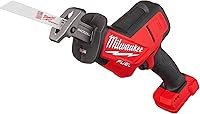
Hackzall is Milwaukee's name for its one-handed reciprocating saw format. A Hackzall is still a reciprocating saw, with a shorter form suited to controlled cuts and tighter access.
Which reciprocating saw types use a cord or battery?
Corded saws need an outlet; cordless saws run on a compatible battery. Pick the power source around the job location, the length of the work session and the battery tools you already own.
A corded saw avoids swapping batteries during a long task, but the cord can get in the way or limit how far you can work from an outlet. Use a suitable extension cord when permitted, and keep the cord clear of the blade and work area.
Cordless saws move more freely between rooms and outdoors. Battery platforms are usually brand-specific, so check compatibility and whether the saw includes a battery and charger.
Many tool-only models require both to run.
The DeWalt DWE305 has a 12 Amp motor, a 1-1/8 in stroke length and a variable-speed trigger rated up to 2,900 strokes per minute. Its 4-position clamp allows flush cutting and offers different blade positions.
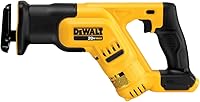
The DeWalt DCS367 is a 20V MAX XR brushless compact saw. Its tool-only weight is 5 lb according to DeWalt's product details, and the battery and charger are sold separately.
Compare the trade-offs in our corded vs cordless reciprocating saw guide. If choosing a battery model, check the battery system before comparing tool features.
When is a compact reciprocating saw the right choice?
Choose a compact reciprocating saw when the tool body needs to fit into a tight area. A smaller body can help around studs, cabinets and overhead work, though you still need room for the blade and safe hand placement.
Compact does not mean suitable for every small cut. The exposed blade still travels back and forth, and the tool needs a stable position against the work where possible.
Use a shorter blade when the space behind the material is limited.
The DeWalt DCS367 is one example of this style. It is 14.5 in long and has a pivoting head, LED light, variable speed and a keyless 4-position blade clamp.
For more compact options and what to compare, read our best mini reciprocating saw guide. If the work is pruning, blade selection matters too; see reciprocating saws for pruning branches.
What is a one-handed reciprocating saw?
A one-handed reciprocating saw is built for a smaller grip and controlled cuts. It can help when a full-size saw is hard to position, but the name does not mean every cut should be made with one hand.
Milwaukee's Hackzall line uses a one-handed design. The M18 FUEL 2719-20 has a 7/8 in stroke length, a pivoting shoe and a brushless motor; it is a bare tool, so you need a compatible battery and charger.
Keep your free hand away from the blade path and secure the material before cutting. If you cannot keep control of the tool or support the work safely, change the setup or use another tool.
Compare the two Milwaukee formats in Sawzall vs Hackzall. That guide can help you decide whether the smaller one-handed style fits your usual jobs.
How is an oscillating multi-tool different?
An oscillating multi-tool moves its accessory through a short side-to-side arc instead of a long reciprocating stroke. Its flat, compact accessories suit detail cuts and tasks such as scraping or sanding close to a surface.
A reciprocating saw is usually the better fit for longer cuts through larger sections. An oscillating tool can be easier to control when you need a shallow cut near trim, a wall or another surface you want to protect.
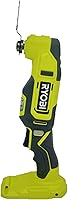
The DeWalt DCS356B is a 20V MAX XR oscillating multi-tool with a brushless motor, LED light and universal accessory adapter. Its three speed settings are 0–13,000, 0–17,000 and 0–20,000 oscillations per minute.
Choose the accessory for the material and cut, and confirm that it fits the tool's adapter. Learn more about its jobs in what an oscillating tool is good for.
Which saw type suits common home jobs?
Match the tool to access, cut length and the level of control needed. A tool that fits the space and material is easier to manage than one chosen by power alone.
| Job | Type to consider | Why |
|---|---|---|
| Repeated cuts near a workbench | Corded full-size reciprocating saw | An outlet can keep the tool running without battery changes |
| Moving between rooms or outdoors | Cordless reciprocating saw | No power cord trails behind the tool |
| Cutting between studs | Compact reciprocating saw | The shorter tool body can fit into tighter framing |
| Short cut in a confined position | One-handed reciprocating saw | Its smaller grip can be easier to position |
| Trimming close to a wall or surface | Oscillating multi-tool | The short accessory motion helps with controlled detail work |
| Cutting a branch | Reciprocating saw with a suitable pruning blade | A blade made for wood and branches suits the material |
For pipe, metal or wood, select a blade designed for that material and thickness. Our reciprocating saw blade guide explains the key blade choices.
Can you use one reciprocating saw for every job?
One reciprocating saw can cover many rough-cut tasks if you change to the right blade. It may still be too large for a confined cut or less controlled than an oscillating tool when working close to a finished surface.
Look at the work area before buying. Note whether you can reach the cut, brace the shoe against the material, control the tool with both hands and keep the blade clear of anything behind the cut.
What should you compare before choosing a reciprocating saw?
Compare power source, size, blade control and handling before focusing on speed. These details affect whether the saw suits the work area and the user.
- Power source: Corded models need an outlet; cordless models need a compatible battery.
- Body size: A compact saw may fit between studs or into a cabinet opening more easily.
- Stroke length and speed control: These affect how the blade moves and how much control you have over a cut.
- Blade clamp: A keyless clamp can make blade changes simpler; multiple positions can help with flush cutting.
- Shoe: A pivoting shoe can help keep contact with the work as you guide a cut.
- Weight and grip: Consider how you'll hold the saw for the duration of the task.
- Blade choice: Match the blade to the material and cut.
Read the instructions for the tool and blade, wear eye and hearing protection, and secure the work before cutting. Keep your hands clear of the blade path and check for hidden wiring or pipes before cutting into a wall.
Which type of reciprocating saw should you choose?
Choose a corded model for work near an outlet, a cordless model for movement, and a compact or one-handed model when access and control are the main concerns. Choose an oscillating multi-tool for shorter detail work close to a surface.
If you expect to cut larger sections, start with a full-size reciprocating saw and compare blade options. For cuts between studs or in a tight space, consider a compact format; for a small, controlled task near trim, compare an oscillating tool.
Use the reciprocating saw uses guide to match the saw to the job, then check the blade and tool instructions before you start.
Frequently asked questions
What are the main types of reciprocating saws?
The main types are full-size corded saws, full-size cordless saws, compact reciprocating saws, and one-handed models. They all move a blade back and forth, but differ in power source, size, handling and intended work.
Choose by access, cutting location and how much control the job needs.
Is a Hackzall the same as a reciprocating saw?
A Hackzall is Milwaukee's name for a one-handed reciprocating saw. Its smaller grip and body suit controlled cuts and tighter spots, while a full-size reciprocating saw gives you a larger two-handed format.
Blade choice and safe support still matter with either style.
What is the difference between a reciprocating saw and an oscillating multi-tool?
A reciprocating saw drives a blade in a straight back-and-forth stroke for rougher, deeper cuts through material. An oscillating multi-tool moves its accessory through a short side-to-side arc, which suits controlled detail cuts, scraping and sanding close to a surface.
Should I choose a corded or cordless reciprocating saw?
Choose corded if you can work near an outlet and want to avoid battery changes. Choose cordless if the work moves around or an outlet is inconvenient.
Also compare the tool's size, blade clamp, speed control and the battery system you already use.
Can an oscillating tool replace a reciprocating saw?
An oscillating tool can handle some small, precise cuts, but it is not a direct replacement for a reciprocating saw on longer or rougher cuts. Its compact accessory works close to a surface, while a reciprocating saw's longer blade stroke is better suited to cutting through larger sections.