What Is an Oscillating Tool Good For Around the House?
An oscillating tool is good for short, precise cuts, sanding corners, scraping, and grout removal where a larger saw or sander is hard to control. Choose the right accessory for the material and keep the blade clear of hidden wires and pipes.
On this page (6 sections)
- What is an oscillating tool good for around the house?
- Can an oscillating tool sand corners and scrape old material?
- Can an oscillating tool remove grout or cut tile?
- What should you avoid using an oscillating tool for?
- How do you choose an oscillating tool for home use?
- Is an oscillating tool worth having around the house?
An oscillating tool is good for short, precise cuts, sanding corners, scraping, and grout removal in places where a larger saw or sander is awkward. It uses a small side-to-side motion, so the right accessory can work close to walls, trim, cabinets, and other surfaces.
The tool is most useful for small jobs and controlled detail work. It won't replace a circular saw for long straight cuts or a full-size sander for broad surfaces.
What is an oscillating tool good for around the house?
An oscillating tool is good for flush cuts, plunge cuts, detail sanding, scraping, and grout removal. The accessory determines what material it can handle.
Use a wood blade to trim a door jamb or cut a small opening in drywall. A sanding pad can reach an inside corner, while a scraper can lift old caulk or adhesive where the surface allows it.
For tile joints, fit a grout removal accessory and work carefully. For metal, use a blade designed for metal and check the job limits in our guide to whether an oscillating tool can cut metal.
When is an oscillating multi-tool useful for flush cuts?
A flush-cut blade helps trim a piece level with a nearby surface. For example, you can cut a door jamb at floor height to make room for new flooring, or shorten a dowel that sticks out from a project.
Keep the blade flat against a scrap piece of the material you want to match, if that is safe for the job. This can help guide the cut without marking the floor or wall below it.
The Ryobi ONE+ 18V Multi-Tool uses an 18V battery, which is sold separately. Its variable-speed dial adjusts the oscillation rate up to 20,000 OPM, and it has on-board accessory storage.
Can you use one to cut a small opening?
Yes, a plunge-cut blade can start a cut within a board or drywall panel. Mark the opening first, then check both sides for wiring, plumbing, and framing before cutting.
A multi-tool can be handy for notches, outlet openings, and small repair cuts. For long cuts or thick stock, use a saw made for the material and cut length.
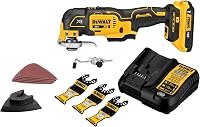
The [DeWalt DWE315SK Corded Multi-Tool Kit] includes wood cutting blades, a sanding pad, and a depth guide system for repeatable cuts. Its quick-change accessory system allows blade changes without wrenches.
Can an oscillating tool sand corners and scrape old material?
An oscillating tool can sand tight corners and scrape residue when you fit the matching pad or scraper. Its small working area makes it useful for edges and spots a larger sander may not reach.
Use a sanding pad with suitable abrasive paper on a door edge, cabinet corner, or small patch of trim. Keep the pad moving, use light pressure, and stop often to check the surface.
A scraper attachment can help remove dried adhesive, paint, or caulk from a surface that can tolerate scraping. Test an inconspicuous area first, because a sharp edge can gouge wood, plastic, or a finished surface.
Which tool is useful for sanding and scraping jobs?
The Dremel Multi-Max MM35-02 Kit suits readers who want a corded tool for cutting, sanding, and scraping tasks. It has a variable-speed dial from 10,000 to 23,000 OPM and includes sanding pads, a backer pad, and a bi-metal flush-cut blade.
Its tool-less accessory change lets you switch attachments without a wrench. The 7 ft cord gives you room to work near an outlet, though you still need to keep the cord clear of the blade and work area.
Skip sanding with a multi-tool when you need to cover a large tabletop, wall, or floor. A larger sander will usually cover that surface more evenly and with fewer passes.
Can an oscillating tool remove grout or cut tile?
An oscillating tool can remove grout with a grout accessory, and it can make some tile cuts with a blade suited to the tile. Keep the attachment in the grout line or cut mark and work slowly to limit chipping.
Grout removal is a detail job. Start with light pressure and a shallow approach, especially near tile edges, and clear dust as you work so you can see the joint.
For tile cutting, the material and blade matter. Read how an oscillating tool can cut tile before attempting a cut, and use eye protection and dust control suited to the job.
If you're removing grout from a larger area, compare the tool and accessory options in our guide to the best oscillating tools for grout removal. A dedicated grout tool may be a better fit for a large renovation.
What accessories help an oscillating tool handle different jobs?
Use a blade made for the material and cut. Wood blades suit wood, metal blades suit metal, and a grout accessory is designed for grout lines.
A mixed accessory kit can help if you have several kinds of small jobs. The Ryobi 16-Piece Multi-Tool Accessory Kit includes accessories for wood, metal, plastic, tile, grout, fiberglass, drywall, masonry, and concrete.
Check that an accessory fits your tool before starting. The Ryobi set is described as fitting most multi-tools without an adapter, but compatibility can vary by tool and attachment.
What should you avoid using an oscillating tool for?
Avoid using an oscillating tool for long, fast cuts, deep cuts beyond the blade's reach, or any cut where you cannot inspect for hidden hazards. A reciprocating saw, circular saw, jigsaw, or dedicated sander may suit those tasks better.
A reciprocating saw moves its blade back and forth over a longer stroke, so it is often a better fit for demolition and cutting branches. See what a reciprocating saw is good for when choosing between the two tools.
An oscillating tool can still create dust, heat, noise, and sharp debris. Wear safety glasses and hearing protection, control dust, and unplug a corded tool or remove its battery before changing accessories.
Don't force a blade through a cut or use a damaged accessory. If the tool binds, gets unusually hot, or the material shifts, stop and reset the work.
How do you choose an oscillating tool for home use?
Choose an oscillating tool based on the jobs you expect, the power source you prefer, and the accessories you need. A cordless tool can suit quick jobs away from outlets, while a corded kit can keep working without a battery swap.
The Ryobi ONE+ 18V Multi-Tool is a cordless option for users already set up with a compatible battery. The DeWalt DWE315SK and Dremel MM35-02 are corded kits with accessories for cutting and sanding.
Before buying, check which blades and pads are included, how accessories attach, and whether replacements are easy to find. Our guide to oscillating tools for the money compares options for different home tasks.
For straight cuts with better control, see how to cut straight with an oscillating tool. Use a straightedge or guide where the cut allows it, and keep the tool steady through the pass.
Is an oscillating tool worth having around the house?
An oscillating tool is useful if you often need short cuts, corner sanding, scraping, or grout work in tight spaces. It earns its place as a detail tool, especially when one attachment change can turn a trim cut into a small sanding or scraping job.
Choose a cordless model if moving freely matters and you already have compatible batteries. Choose a corded kit if you want included accessories and don't mind working near an outlet.
If your main job is cutting branches, pipes, or larger pieces of lumber, a reciprocating saw may be the better fit. For smaller precision work, compare the oscillating tool and jigsaw for home projects before deciding.
Frequently asked questions
What is an oscillating tool best used for?
An oscillating tool is best for controlled cuts and surface work in tight spots. With the matching accessory, it can trim wood or plastic, cut around an opening, sand a corner, scrape residue, or remove grout.
It is less suited to long, fast cuts than a saw made for that job.
Can an oscillating tool cut wood?
Yes, with a wood or suitable multi-material blade, an oscillating tool can make plunge cuts, trim a board flush, or notch a small area. Keep the shoe steady, let the blade work without forcing it, and check for nails, wiring, and plumbing before cutting.
Can an oscillating tool remove grout?
Yes, a grout removal blade can clear grout from tile joints, especially in a small repair area. Work slowly and keep the blade centered in the joint to reduce the chance of chipping tile.
For a larger floor, a dedicated grout tool may be more efficient.
Is an oscillating tool good for cutting metal?
It can cut some metal with a blade made for that material, such as a short cut through a fastener or thin piece. The job depends on the metal, blade, and access.
See our guide to whether an oscillating tool can cut metal before choosing an accessory.