Oscillating Tool vs Jigsaw for Home Projects: Which Is Better? (October 2026)
Choose an oscillating tool for short, controlled cuts and a jigsaw for longer curved or shaped cuts in sheet material. The right choice depends on the cut line, material, and room to maneuver.
On this page (10 sections)
- Oscillating tool vs jigsaw: which should you choose?
- Which tool makes cleaner cuts?
- When is an oscillating tool the better choice?
- When is a jigsaw the better choice?
- How do blade motion and control compare?
- Does corded or cordless power change the choice?
- Which tool makes sense for your project list?
- What should you check before cutting?
- Should you buy an oscillating tool or a jigsaw?
- Frequently asked questions
Choose an oscillating tool for short, controlled cuts and a jigsaw for longer curved or shaped cuts in sheet material. For home projects, the cut you need matters more than which tool has more attachments.
An oscillating tool can trim close to a surface, cut a small notch, scrape adhesive, or sand a corner with the right attachment. A jigsaw is easier to guide through a longer cut when the blade needs to follow a curve or shape.
If you’re comparing a jigsaw with a multi-tool, decide whether your projects involve more access work or more continuous cuts. This guide compares control, cut length, setup, and the limits of each tool.
 Best for flush cuts and detail work
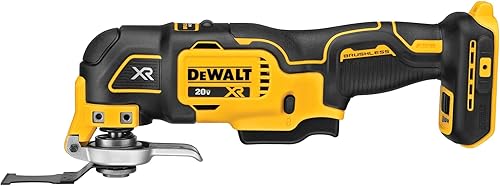
DeWalt DCS356B XR Oscillating Tool

Oscillating tool vs jigsaw: which should you choose?
Choose the oscillating tool for localized cuts near an obstruction, and choose the jigsaw for longer cuts across a board or panel. Their blades move differently, so each handles a different kind of work.
An oscillating tool swings its accessory through a short arc. That motion helps you control a cut in a tight spot, especially when you need to trim something flush or create a small opening.
A jigsaw moves its narrow blade up and down. Resting the shoe on the work helps you guide it along a longer line, including a curve, though the blade needs room to pass through the material.
Jigsaw vs multi-tool for a small opening
A multi-tool is useful when the opening is small, access is tight, or the cut needs to stop close to a nearby surface. Use an appropriate blade and approach the cut carefully, since short blade travel still requires control.
A jigsaw is a better fit when the opening has a broad curve or a more complex outline. Plan an entry point and make sure the shoe can sit steadily on the work.
Before cutting into a wall, floor, or cabinet, check for wiring, plumbing, and other hidden obstacles. The tool choice does not make an unknown surface safe to cut.
Which tool makes cleaner cuts?
A jigsaw is generally easier to steer through a long shaped cut, while an oscillating tool gives more control over a small cut near an edge. A clean result still depends on the blade, material, support, and pace.
The DeWalt jigsaw has variable speed control and 4-position orbital action. Those adjustments let you change the cut approach, while its integrated dust blower helps clear the line of sight.
The DeWalt oscillating tool has a 3-speed selector and variable-speed trigger. Its short blade motion is useful for careful trimming, though it takes repeated movement to extend a cut across a wide board.
For either tool, mark the cut line clearly and support the piece so it cannot shift. Choose a blade made for the material, and keep the tool’s base or shoe stable where its design allows.
When is an oscillating tool the better choice?
Use an oscillating tool when the cut is short, flush, or difficult to reach with a larger saw. It also covers scraping and sanding tasks that a jigsaw does not handle with its cutting blade.
A flush-cut blade can trim material near a wall, floor, or adjoining piece where a jigsaw shoe may not fit. A narrow accessory can also help with a small notch or opening.
An oscillating tool can switch from cutting to sanding or scraping by changing the attachment. The DeWalt DCS356B XR oscillating tool has a quick-change system, a universal adapter for most accessory brands, and an LED light.
The tool’s usefulness depends on selecting the right accessory. For tile work, read our guide to cutting tile with an oscillating tool before choosing a blade or starting a cut.
Can an oscillating tool replace a jigsaw?
An oscillating tool can handle some short cuts, but it does not replace a jigsaw for frequent long curves or shaped cuts. Repeatedly extending a cut with a short blade can take more time and make it harder to maintain a smooth line.
If you need a straight cut with an oscillating tool, a guide can help keep the accessory on course. Our guide to cutting straight with an oscillating tool covers that focused task.
When is a jigsaw the better choice?
Use a jigsaw for longer curves, cutouts, and shaped cuts through boards or panels. The shoe supports the tool on the work, while its narrow blade follows the line.
The DeWalt 20V MAX XR Jig Saw accepts T-shank blades and has a variable-speed trigger and dial. Its shoe bevel has detents at 0, 15, and 30 degrees, with a positive stop at 45 degrees.
A jigsaw needs enough room for the blade to move beneath the work and for the shoe to sit flat. Clamp the material when practical, keep hands away from the blade path, and check that the cut will not hit a support or work surface.
For a different comparison, see reciprocating saw vs jigsaw for DIY cuts. A reciprocating saw is often considered for rougher demolition or access work, while a jigsaw suits guided shapes.
How do blade motion and control compare?
A jigsaw’s up-and-down blade motion suits continuous cuts, while an oscillating tool’s short arc suits controlled trimming. Neither movement guarantees a clean result without a suitable blade and steady handling.
The jigsaw’s variable-speed trigger and dial allow speed changes while the 4-position orbital setting changes the blade’s action. Use the manual’s guidance for matching the setting to your material and finish needs.
The DeWalt oscillating tool offers 3 selected speed settings, plus a variable-speed trigger. Its quick-change system lets you swap attachments without a wrench, which helps when a project includes cutting and scraping.
Which is easier to control?
An oscillating tool can feel easier to position for a small cut because its body and accessory can approach a tight area. You still need a firm grip and a stable stance, especially when the blade contacts the work.
A jigsaw can be easier to guide along a long line because its shoe rides on the material. It may be harder to use in a confined corner where the shoe cannot sit flat.
Think about the direction of the cut as well as the tool body. A tool that fits your hand may still lack space for the blade to travel.
Does corded or cordless power change the choice?
Power source affects where you can work, but it does not change which tool shape fits the cut. Match the saw style to the task first, then decide whether a cord or battery suits your work area.
Both DeWalt tools here are battery powered, and each is sold as a bare tool. Their batteries and chargers are sold separately, so check what you already own before choosing either.
The Jorgensen corded multi-tool includes 16 accessories for cutting, scraping, sanding, cleaning, and polishing. Its cord means you’ll need a suitable outlet and a path that stays clear of the work.
If your work is mostly close to the floor or inside a cabinet, cord management can affect movement. For occasional jobs near an outlet, a corded tool may be a practical option.
Which tool makes sense for your project list?
Pick the tool that matches the cuts you expect to make most often. A short repair list can favor a multi-tool, while furniture, shelving, or panel projects often call for a jigsaw.
Choose an oscillating tool if your list includes trimming door jambs, cutting small notches, scraping old material, or sanding corners. The oscillating tool uses guide explains common household tasks and attachment choices.
Choose a jigsaw if you plan to cut curves, rounded corners, or openings in boards and panels. It is a more direct fit when the cut line travels across the material rather than stopping after a short section.
If you’re still comparing saw types for a home workshop, our types of reciprocating saws and multi-tools guide explains where those tools fit. A reciprocating saw is a separate option for jobs where a long blade and rough access matter.
What should you check before cutting?
Check the material, blade, support, and hidden hazards before turning either tool on. Read the manual for the tool and accessory, then set up the work so it cannot move unexpectedly.
Use eye protection and hearing protection suited to the tool and task. Keep the blade clear of your hands, and unplug or remove the battery before changing an accessory.
Inspect the work area on both sides of the cut. A blade can pass through thin material quickly, so make sure the bench, floor, and anything behind the work are clear.
Follow the blade maker’s instructions for the material and cut. If the blade binds, the tool shifts, or you lose the cut line, stop and reset instead of forcing the tool forward.
Should you buy an oscillating tool or a jigsaw?
Choose an oscillating tool for flush cuts, short notches, and mixed repair tasks; choose a jigsaw for longer curves and shaped cuts in boards or panels. If both jobs appear often in your project list, they serve different roles.
The DeWalt DCS356B is a fit for users who value speed control and quick accessory changes across cutting, scraping, and sanding. The DeWalt jigsaw is the better match when a cut needs to travel along a curve or bevel through a workpiece.
For a corded multi-tool with a broad set of included accessories, the Jorgensen is another option. Pick by the work you expect to do and the power source that fits your workspace.
If you already know an oscillating tool is the right category, compare the best oscillating tools for the money to narrow your options. The best first tool is the one that fits your most common cut.
Frequently asked questions
Is an oscillating tool better than a jigsaw?
An oscillating tool is better for short cuts near walls, floors, or other obstacles, while a jigsaw is better for longer curved or shaped cuts.
Choose based on the blade path and available clearance. Both need the right blade and a stable setup for the material.
Can a jigsaw cut straight lines?
Yes, a jigsaw can cut straight lines when you mark the path and guide the shoe steadily.
A straightedge can help when the cut needs to stay especially true. Blade choice, material support, and a steady feed affect the finished edge.
Is an oscillating tool good for cutting wood?
Yes, an oscillating tool can cut wood with a suitable wood-cutting blade. It works especially well for short cuts, flush trimming, and small notches.
For a long curve across a board, a jigsaw is usually easier to guide.
Can a multi-tool cut metal?
An oscillating tool can cut some metal with a blade designed for that material, but the tool and blade must suit the metal’s type and thickness.
Check the accessory instructions and secure the work before cutting. Read our guide on whether an oscillating tool can cut metal.
Which tool is better for cutting a countertop opening?
A jigsaw is often the better fit for a large, shaped opening in a countertop, provided the material and blade are compatible.
An oscillating tool can help with a small adjustment or an area near an edge. Follow the countertop maker’s cutting instructions and check for hidden parts below.
Frequently asked questions
Is an oscillating tool the same as a jigsaw?
No. An oscillating tool moves its attachment through a short back-and-forth arc and accepts blades, scrapers, and sanding accessories.
A jigsaw moves a narrow blade up and down through material, making it suited to longer cuts and curves.
Choose by the cut shape and access you need.
Can an oscillating tool cut a curve?
It can make small notches or short shaped cuts, but it is usually a poor fit for a long smooth curve. A jigsaw is easier to guide along a curved line in sheet material because its narrow blade follows the path as the shoe rests on the work.
Which tool is better for cutting a board flush?
An oscillating tool is usually the more useful choice for trimming a peg, shim, or board close to a wall or another surface. Fit a suitable flush-cut blade, keep the tool controlled, and check for hidden wires, pipes, or fasteners before cutting.
Can a jigsaw make a plunge cut?
Some jigsaw models support plunge cutting with the right blade and technique, but follow the tool manual and use a method suited to the material. For a small opening near an edge or a cut in a tight spot, an oscillating tool may offer more direct control.
Should I buy a multi-tool or a jigsaw first?
Buy a jigsaw first if your projects need long straight, curved, or shaped cuts in boards and panels. Choose a multi-tool first if you expect more flush cuts, notches, scraping, or sanding in confined spots.
If both jobs are common, each tool fills a different role.