Reciprocating Saw vs Jigsaw for DIY Cuts: Which Is Better? (October 2026)
Choose a jigsaw for controlled cuts in sheet goods and a reciprocating saw for rough cuts, demolition and tight access. The right tool depends on the cut line, material and room to guide the saw.
On this page (7 sections)
Choose a jigsaw for controlled cuts in sheet goods and a reciprocating saw for rough cuts, demolition and tight access. For DIY cuts, the main difference is how each tool is guided: a jigsaw’s shoe rides on the work, while a reciprocating saw’s blade moves freely from the tool’s nose.
That makes the jigsaw easier to steer along a marked line in supported material. The reciprocating saw is useful when the cut is awkward, the material is already installed or you need to remove a section.

Reciprocating saw vs jigsaw: which makes a straighter cut?
A jigsaw is usually easier to guide along a marked line. Its shoe rests on the workpiece, giving you a stable surface as you steer the blade through a board or sheet.
A reciprocating saw can cut straight, but the long back-and-forth motion can wander if you rush or twist the tool. It is better suited to cuts where a clean, precise edge is less important.
For either saw, use a blade intended for the material and let it do the work. Clamp the piece so it cannot shift, keep your hands clear of the blade path and start slowly until the cut is established.
Is a reciprocating saw or jigsaw better for curves?
A jigsaw is the better choice for following curves in plywood, boards and other supported work. Its blade is short and close to the shoe, so you can steer around a pattern without moving a large tool body through the cut.
A reciprocating saw can make rough curves, but it is harder to keep the blade on a narrow line. Use it for broad cuts where the edge can be cleaned up later.
If you need help choosing a blade for the material, see which reciprocating saw blade to use. The same habit applies to a jigsaw: blade type and tooth pattern affect how it cuts.
Which saw handles DIY jobs better?
Choose the jigsaw for trim work, cutouts and curves; choose the reciprocating saw for demolition and rough cuts. Both can cut wood and metal with a suitable blade, but their best jobs differ.
A jigsaw is a practical choice for cutting shapes in plywood, trimming a panel or making an opening in a supported board. It can also make bevel cuts on models with an adjustable shoe.
A reciprocating saw is useful for cutting through framing, removing branches and reaching between studs. Its compact body can help where a larger saw cannot fit, though access alone does not make it a precision tool.
Where a jigsaw has the advantage
The jigsaw’s shoe gives you a consistent contact point on the surface. That makes it easier to follow a pencil line, though the shoe needs room to lie flat and the work needs support.
The DeWalt 20V MAX XR Jig Saw has a variable speed trigger and dial, a 4-position orbital setting and a keyless shoe bevel with detents at 0, 15, 30 and 45 degrees. Its dust blower helps clear the cut line, and it accepts T-shank blades.
Use a jigsaw when the visible edge matters and the piece can be held steady. For a neat cut, mark the line clearly, support both sides and avoid pushing hard enough to bend the blade.
Where a reciprocating saw has the advantage
A reciprocating saw works well when the cut is rough or the work is hard to bring to a bench. You can use it to remove material in a confined area, but it takes practice to keep the blade from flexing or wandering.
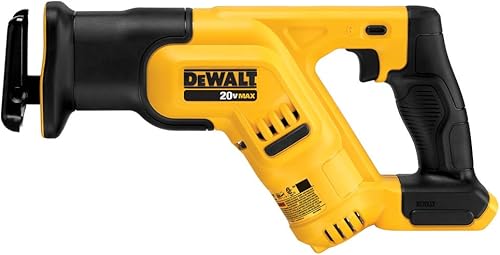
The DeWalt DCS387B Compact Recip Saw is 14 inches long and has a 4-position blade clamp for flush cuts and different blade positions. Its variable speed trigger and pivoting shoe help with control as you work.
For a broader overview of jobs that suit this tool, see what a reciprocating saw is good for. Match the blade to the material and check behind the cut before starting.
Which saw is safer and easier to control?
A jigsaw is easier to control for a visible cut line, while a reciprocating saw needs a firm grip and steady contact. Neither tool is safe to use without the right blade, stable work and clear awareness of what is behind the cut.
Wear eye and hearing protection, secure the workpiece and keep both hands away from the cutting path. Unplug or remove the battery before changing blades, and follow the tool manual for blade installation and operation.
With a reciprocating saw, press the shoe against the work when possible to reduce blade vibration. Let the blade stop before moving the tool, and avoid twisting it while cutting.
With a jigsaw, hold the shoe flat and guide the tool at a pace the blade can handle. Forcing the turn can bend or break a blade and may damage the workpiece.
When cutting into a wall or a finished surface, identify wiring, plumbing and other hidden hazards first. If you cannot confirm what is behind the material, choose a different access point or ask a qualified professional.
Can either saw cut metal or plastic?
Both saws can cut some metal and plastic when fitted with a blade made for that material. Use the blade manufacturer’s guidance for thickness, tooth spacing and speed.
For thin sheet metal, clamp the work close to the cut and support it to limit vibration. A jigsaw is easier to steer along a line, but a reciprocating saw may be more practical for installed pipe or metal that is difficult to bring to a bench.
For plastic pipe, use a blade suitable for plastic and support the pipe so it cannot roll. A rough cut may need deburring before joining, and a jigsaw may be simpler if the pipe is fixed securely.
The tool alone does not determine cut quality. Blade choice, work support and steady feed matter with either saw.
What should you buy for a first DIY saw?
Buy a jigsaw first if your projects need accurate curves or cutouts; buy a reciprocating saw first if they involve demolition and awkward access. If you already own a compatible battery system, that can also guide your choice.
The DeWalt jig saw is the most suitable of these options for shaping work. Its variable speed trigger and dial, orbital settings and bevel shoe support several kinds of guided cuts.
For a compact reciprocating saw, the DeWalt DCS387B offers a 14-inch total length and a 4-position blade clamp. Its battery and charger are sold separately, so account for the tool’s bare-tool format when planning your setup.
The Craftsman V20 Recip Saw is another compact option, at 14.5 inches, with a 1-inch stroke length and a tool-free blade release. It belongs to the V20 cordless system, and its battery and charger are also sold separately.
Compare the reciprocating saw vs hacksaw if your main job is cutting pipe or bolts. A hand hacksaw can give you more control in a small cut, while a reciprocating saw can save effort on rougher work.
How do reciprocating saws and jigsaws compare?
The jigsaw is the better fit for guided shaping, while the reciprocating saw is the better fit for rough removal and difficult access. Use this quick comparison to match the tool to the cut you need.
| Product | Best for | Cut style | Access | Blade setup | Our score |
|---|---|---|---|---|---|
| DeWalt DCS387B Compact Recip Saw | tight access | Freehand back-and-forth cuts | Compact 14 in total length | 4-position clamp | 8.4 |
| DeWalt 20V MAX XR Jig Saw | guided curves | Guided cuts with a shoe on the work surface | T-shank blade clamp | 8.8 | |
| Craftsman V20 Recip Saw | occasional rough cuts | Freehand back-and-forth cuts | 14.5 in compact size | Tool-free blade release | 7.9 |
| DIY need | Better fit | Why |
|---|---|---|
| Following a marked curve | Jigsaw | The shoe rests on the surface and helps guide the cut |
| Making a cutout in a board | Jigsaw | Easier to steer around a pattern |
| Removing installed material | Reciprocating saw | The blade can reach awkward areas |
| Flush cutting | Reciprocating saw | A multi-position clamp can set the blade for flush cuts |
| Cutting sheet goods neatly | Jigsaw | More control along a visible line |
| Rough demolition | Reciprocating saw | Suited to fast removal where edge quality is secondary |
Which saw is better for your DIY cuts?
Choose the jigsaw for controlled curves, cutouts and visible edges; choose the reciprocating saw for demolition, rough cuts and tight access. If you expect to do both kinds of work, start with the tool that fits your next few projects.
For a jigsaw, check that the shoe can sit flat and that you can support the workpiece. For a reciprocating saw, plan the blade path, select the right blade and keep the shoe steady against the material when possible.
See types of reciprocating saws and multi-tools if you are still comparing tool styles. That guide helps you decide whether a reciprocating saw, compact one-handed saw or oscillating tool suits the work.
Frequently asked questions
Is a reciprocating saw or jigsaw better for DIY?
A jigsaw is better for controlled straight or curved cuts in supported boards and sheet goods. A reciprocating saw suits rough cuts, demolition and places where a shoe cannot sit flat.
For a DIY project, choose based on the cut line and access rather than the tool’s name alone.
Can a reciprocating saw cut curves?
A reciprocating saw can make broad, rough curves when you have room to guide the blade, but it is harder to follow a tight marked line. A jigsaw’s shoe rests on the workpiece and helps you steer around curves with more control.
Can a jigsaw cut wood and metal?
A jigsaw can cut wood or metal when you fit a blade made for that material and support the workpiece. Check the blade maker’s material and thickness guidance, clamp the work securely, and use a suitable speed instead of forcing the cut.
When should I use a reciprocating saw?
Use a reciprocating saw for rough cuts, demolition and cuts in awkward locations where a jigsaw’s shoe cannot sit flat. Choose the right blade for the material, keep the shoe against the work when possible, and check for wiring or pipes before cutting inside a wall.
Do I need both saws?
You may want both if your projects include both finish cuts and rough removal. A jigsaw handles more controlled shaping, while a reciprocating saw reaches into tight spaces and suits demolition.
If you only make one kind of cut, buy the tool that fits that work first.