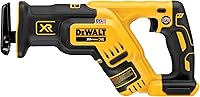
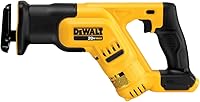
How Does a Reciprocating Saw Work?
A reciprocating saw works by turning motor power into a back-and-forth blade stroke. The blade moves through the material as the shoe rests against the work, while the trigger controls speed.
On this page (9 sections)
- How does a reciprocating saw turn power into blade motion?
- What do the shoe and blade holder do?
- Does a reciprocating saw cut on the push or pull stroke?
- What controls the speed and feel of a reciprocating saw?
- Why does blade choice change how the saw works?
- What can a reciprocating saw cut?
- How do corded and cordless saws get power?
- How do you keep the cut controlled?
- How does a reciprocating saw work, in short?
A reciprocating saw works by turning motor power into a back-and-forth blade stroke. The blade cuts as it moves through the material, while the shoe rests against the work and the trigger controls how quickly the blade cycles.
The tool is useful for rough cuts, demolition, pruning, and cutting in places where a circular saw may not fit. Its speed and control depend on the saw, blade, material, and how firmly you support the work.
How does a reciprocating saw turn power into blade motion?
A reciprocating saw uses a motor and drive mechanism to convert rotation into a straight, repeated stroke. That motion carries the blade forward and back through its holder.
When you squeeze the trigger, the motor spins. Internal parts convert that rotation into a push-pull movement, and the blade clamp transfers it to the blade.
The blade's teeth remove material as they travel through the cut. A longer stroke moves more blade through the work with each cycle, while a faster stroke makes more cycles per minute.
For example, Makita gives its XRJ04Z a variable-speed motor rated for 0–2,800 strokes per minute and a 1-1/4 in stroke length. Those figures describe motion, not a promise that every cut will be fast; blade choice, material, and technique also matter.
What do the shoe and blade holder do?
The shoe supports the saw against the work, and the blade holder secures the blade while it moves. Together, they help keep the cut steady and the blade aligned.
The shoe is the plate at the front of the tool, near the blade. Rest it against the material when you can, so the saw doesn't bounce freely and the blade has less unsupported length.
The blade holder grips the blade's tang, which is the end that fits into the saw. Some models have a tool-free release to make blade changes quicker, but always follow the saw's instructions and disconnect power or remove the battery before changing blades.
Makita and Craftsman both describe tool-free blade changes on these models. A quick release doesn't remove the need to check that the blade is locked in before cutting.
Does a reciprocating saw cut on the push or pull stroke?
A reciprocating saw cuts as the blade teeth travel into and through the material; many common blades cut on the pull stroke. The tooth direction and blade design determine how that cutting action works.
The tool's forward and backward movement happens continuously while the trigger is pressed. Depending on the blade and cut, one stroke may do more cutting than the other, so choose a blade made for the task rather than assuming all blades cut the same way.
The guide to reciprocating saw blade choices explains how material, tooth pattern, and blade length affect the cut. Check the blade package and saw manual for fit and use instructions.
What controls the speed and feel of a reciprocating saw?
The trigger controls speed on variable-speed saws, and the saw's stroke rate affects how quickly the blade travels. Your grip, the shoe's contact with the work, and the blade also affect how the cut feels.
A variable-speed trigger lets you start slowly and increase speed as the blade enters the material. Slower starts can help reduce jumping, while full speed may suit a cut once the blade is stable and moving freely.
Makita lists a variable-speed trigger and up to 2,800 strokes per minute for the XRJ04Z. Craftsman gives the V20 saw a variable-speed trigger with a stated range up to 3,000 RPM; the units differ, so don't compare those figures as if they were measured the same way.
A saw can still vibrate or pull as the blade meets the work. Use a secure stance, hold the saw with both hands if the instructions call for it, and avoid forcing the blade through a bind.
Why does blade choice change how the saw works?
The blade determines what material the saw can cut effectively and how the teeth engage it. Match the blade to the material, thickness, and access you have.
Blades differ in length, tooth spacing, and construction. A blade with coarse teeth can clear wood chips quickly, while a finer tooth pattern is generally used for metal; the correct choice depends on the specific cut and the blade maker's directions.
The DEWALT DW4898 set contains a selection of bi-metal blades for common wood and metal applications. Its set includes several blade lengths from 6 to 9 in, with different tooth patterns.
Don't choose a blade only because it is long. A blade that extends far beyond the work can flex, and a blade that is too short may not reach through the material safely.
For a closer look at the different saw styles, see types of reciprocating saws and multi-tools. A saw's size and power source can affect where it fits, but the blade still needs to suit the cut.
What can a reciprocating saw cut?
A reciprocating saw can cut wood, metal, plastic, and other materials when paired with a suitable blade. It is often used for rough work where access matters more than a perfectly smooth edge.
Examples include trimming branches, cutting pipe, removing framing, and shortening nails or bolts. The saw's movement can make it harder to follow a precise line than a tool designed for guided finish cuts.
See what a reciprocating saw is good for for examples by task.
How do corded and cordless saws get power?
A corded reciprocating saw draws power through its electrical cord, while a cordless saw runs from a battery. Both use a motor to create the same basic back-and-forth blade motion.
Cordless models let you work away from an outlet, but the battery and charger are separate for some tool-only versions. The Makita XRJ04Z and Craftsman V20 are both described as bare tools, with batteries and chargers sold separately.
Think about where you'll cut and how long the work may take. The comparison of corded and cordless reciprocating saws covers the trade-offs in more detail.
How do you keep the cut controlled?
Keep the shoe against the work when possible, choose a blade that matches the material, and let the saw cut without forcing it. Secure the work so it can't shift or pinch the blade.
Before starting, check that the blade is installed correctly and that the path is clear of hidden wires, pipes, and other hazards. Wear eye protection and follow the saw and blade makers' safety directions.
If the blade binds, release the trigger and let it stop before freeing it. Don't twist the blade sideways in the cut, since that can bend or damage it.
How does a reciprocating saw work, in short?
A reciprocating saw's motor drives a repeating push-pull stroke that moves a toothed blade through material. The shoe supports the tool, the blade determines the cut, and the trigger controls speed.
Choose a variable-speed saw if trigger control matters, and choose blades for the materials you expect to cut. Start with the blade guide to match the teeth and length to the job.
Frequently asked questions
What makes a reciprocating saw blade move?
An electric motor turns a mechanism that changes rotary motion into a straight, back-and-forth stroke. That mechanism drives the blade holder, which moves the attached blade forward and backward.
The blade's teeth cut on the stroke, and the shoe helps steady the tool against the material.
Does a reciprocating saw cut on the push or pull stroke?
Most reciprocating saw blades cut as the teeth move into the material, commonly on the pull stroke, but the exact action depends on blade direction and tooth design. Check the blade's orientation and use a blade made for the material.
Keep the shoe in contact with the work when possible.
What does the shoe do on a reciprocating saw?
The shoe is the flat plate near the blade that rests against the work surface. It helps steady the saw, limits how much of the blade is exposed, and gives you a pivot point for controlled cuts.
Keep it against the material when the cut allows, without forcing the tool.
Can you use any blade in a reciprocating saw?
No, the blade must fit the saw's blade holder and suit the material and cut. Choose tooth spacing and blade length for the job, and check the saw and blade instructions for compatibility.
A wood blade, for example, may not be the right choice for thick metal.