How to Use a Ryobi Reciprocating Saw
Fit the blade, set the stroke speed, brace the shoe against the work and squeeze the trigger with the blade clear of the material. Start slow, let the teeth bite, then raise the speed as the cut settles.
On this page (9 sections)
- What should you check before you squeeze the trigger?
- How does a reciprocating saw cut?
- How do you hold and brace the saw?
- How do you set the speed for wood, metal and plastic?
- How do you start a cut and keep it straight?
- What is a Ryobi recip saw good for around the house?
- How do you change a blade safely?
- What mistakes make a recip saw hard to control?
- Which saw and blade setup should you start with?
Here's how to use a Ryobi reciprocating saw: fit the blade, set the stroke speed, brace the shoe against the work, and squeeze the trigger with the blade clear of the material. Start slow, let the teeth bite, then raise the speed as the cut settles.
That short routine covers most jobs, from pruning a branch to cutting a pipe. The rest of this guide walks through each step so the saw stays under control and the blade lasts.
What should you check before you squeeze the trigger?
Check the blade type, blade clamp and battery before you cut anything. A saw that's set up right is easier to steer than one with a loose blade or a half-seated pack.
Match the blade to the material. A coarse wood blade clears sawdust from timber, while a fine-tooth metal blade keeps the teeth in contact with steel.
A worn or wrong blade is the main reason cuts wander.
Grip the front of the shoe and the rear handle, keeping the trigger hand clear of the blade line. If the blade needs changing, our guide to how to put blade in ryobi reciprocating saw covers the clamp.
How does a reciprocating saw cut?
The blade pushes and pulls in a straight line, so the teeth only bite on one direction of travel. That back-and-forth stroke is what lets the saw plunge into walls and work in tight spots.
The Ryobi ONE+ 18V runs at 3,400 SPM with a 1 in. stroke, and the trigger varies the speed. A longer stroke clears chips faster; a shorter one suits tighter cuts.
Our explainer on how does a reciprocating saw work covers the mechanism in more detail.
How do you hold and brace the saw?
Hold the rear handle with your trigger hand and the front shoe with your other hand, and press the shoe flat against the work before you start. That brace is what keeps the blade from bouncing.
The shoe pivots on many models, so it stays flat as the blade moves through a curve. Keep both feet set and your body behind the cut rather than leaning over it.
Don't reach across your body or cut overhead where the saw can kick toward you. If the blade binds, release the trigger and let it stop before you pull it free.
How do you set the speed for wood, metal and plastic?
Set the trigger low for the first bite, then squeeze to the top speed once the blade is tracking. Speed is your main control on a variable-speed saw, so it's worth practising.
- Wood: start medium and let the coarse teeth clear the kerf. Slow down near a finished edge so the grain doesn't tear.
- Metal: keep the speed low and steady, so the blade doesn't heat and glaze. A fine-tooth blade at moderate speed cuts cleaner than full throttle.
- Plastic: use a low speed to avoid melting. Let the blade do the work instead of forcing it.
The blade set you fit matters as much as the speed. A multi-material set gives you the right tooth count for each of these jobs.
Which blade set fits a Ryobi recip saw?
The Milwaukee 12 Piece Multi Material set covers wood, plastic and metal in one case, so you can switch between jobs without buying separate packs. It has 6 in. and 9 in. blades in a range of tooth counts.
The set includes 6 in. and 9 in. blades in 5, 8, 14 and 18 TPI counts. The 18 TPI blades suit metal, while the 5 TPI blades clear wood fast.
The case adjusts to hold blades up to 9 in. long. Check that your Ryobi's blade clamp takes the same blade type before you fit one.
How do you start a cut and keep it straight?
Start the saw with the blade clear of the work, then bring it down onto the material once it's running at speed. A moving blade is easier to place than one that starts against the wood.
Mark your line and score it with a shallow pass before cutting through. Let the shoe ride on the surface and keep light, even pressure so the blade doesn't twist.
For a plunge cut, tilt the saw and let the teeth bite gradually rather than stabbing straight in. If the cut wanders, back off the trigger and reset the shoe before continuing.
What is a Ryobi recip saw good for around the house?
A Ryobi recip saw handles demolition, pruning and pipe cutting well, which is why it suits homeowners more than fine cabinet work. Its straight stroke makes it the tool for taking things apart.
Use it for cutting out studs, trimming branches, slicing PVC and breaking down pallets. Our guide to what is a reciprocating saw good for lists the jobs where it saves the most time.
It isn't the tool for a clean, square finish. For joinery or a straight edge on a board, a circular saw or a hand saw gives you more control.
The recip saw earns its place when speed and reach matter more than a polished cut.
Who is the Ryobi ONE+ 18V best for?
The Ryobi ONE+ 18V suits homeowners already in the ONE+ battery system, since it runs on the packs you own. It's a cordless tool only, so the battery and charger come separately.
The variable-speed trigger gives you control from a slow start to full speed. At 3.75 lb and 17.09 in. long, it stays manageable in a two-handed grip on light cuts.
The tool-only format keeps the price down if you already have batteries.
How do you change a blade safely?
Pull the battery first, then release the blade clamp and slide the old blade out. The clamp holds the blade in a slot, so a fresh one seats with the teeth facing the right way.
Check the teeth point in the cutting direction marked on the blade. Push the new blade fully into the clamp until it clicks or the collar tightens, then tug it to confirm it's locked.
Refit the battery only when the blade is secure. A blade that isn't seated fully can come loose mid-cut, so test the fit before you start the saw.
What mistakes make a recip saw hard to control?
The biggest mistakes are forcing the blade, cutting with a dull blade and starting the saw in the material. Each one causes bouncing, wandering cuts or a burned edge.
- Forcing the saw: let the teeth cut at their own pace, and back off when the blade slows.
- Dull blade: a worn blade heats the work and tears wood, so swap it early.
- Starting in the cut: always bring a running blade down onto the material.
- Loose shoe: keep the shoe flat against the work so the blade doesn't chatter.
If the saw kicks back, release the trigger and let it stop. Keep the blade away from your legs and never clear chips with your hand while the saw is running.
For more technique, see how to properly use a reciprocating saw.
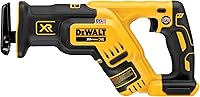
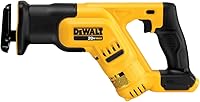
Who is the DeWalt DCS369B best for?
The DeWalt DCS369B suits one-handed work in tight spots, where a compact body and a light weight matter more than a long stroke. It's a tool-only saw, so the battery and charger sell separately.
The body is 12.5 in. front to back and 37% lighter than the DeWalt DCS367, so it fits between joists and into cabinets. Its brushless motor, LED and tool-free blade change make it a good fit for repair work where you're cutting above your head or in the dark.
The 2,800 SPM top speed is a step below the Ryobi's 3,400 SPM.
Which saw and blade setup should you start with?
Pick the Ryobi ONE+ 18V if you already own ONE+ batteries, because the tool-only saw keeps the cost down and the variable speed suits everyday cuts. Pick the DeWalt DCS369B if you mostly work one-handed in tight spaces.
Whichever saw you run, pair it with the Milwaukee 12 Piece set so you have the right blade for wood, metal and plastic. Fit the blade with the battery out, brace the shoe, and start slow.
The routine is the same each time: set up, brace, squeeze, and let the teeth cut. Do that and the saw stays steady and the blade lasts longer.
Keep your first cuts shallow and your grip firm, and the recip saw becomes one of the most useful tools in the garage.
Frequently asked questions
Can I leave the battery in while I change the blade?
No. Pull the battery pack off the saw first, so the trigger can't fire while your hand is near the blade clamp.
On the Ryobi ONE+ 18V, slide the pack free from the handle base, swap the blade, then click the pack back in until it seats.
What stroke speed should I start with on a Ryobi?
Start low on the variable-speed trigger for the first bite, especially on metal or PVC. Once the blade is tracking in the cut, squeeze further to reach the top speed for the rest of the pass.
How often should I change a reciprocating saw blade?
Change it when the cut slows and the blade starts to wander or smoke. A dull blade heats the work and tears wood grain, so swap it before it starts burning the edge.
Can a Ryobi recip saw cut metal and plastic?
Yes, with the right blade. Use a fine-tooth metal blade for steel and a coarse wood blade for timber; a multi-material set covers both so you don't have to buy separate packs.