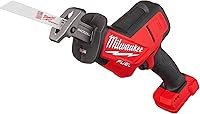
Do Milwaukee Sawzall Blades Fit a Hackzall?
Yes, Milwaukee Sawzall blades fit a Hackzall. Both saws use Milwaukee's standard reciprocating blade interface, so a Sawzall blade locks into a Hackzall's clamp. The blade has to match the clamp type and the material you're cutting, not the saw's name.
On this page (8 sections)
- Do Milwaukee Sawzall blades fit a Hackzall?
- What is the blade interface both saws share?
- Which Sawzall blade types work in a Hackzall?
- How do you fit a Sawzall blade into a Hackzall?
- Does blade length matter more on a Hackzall?
- When should you use each saw with the same blade?
- Which blades should you buy for a Hackzall or Sawzall?
- The short answer on Sawzall blades and a Hackzall
Yes, Milwaukee Sawzall blades fit a Hackzall. Both saws use Milwaukee's standard reciprocating blade interface, so a Sawzall blade locks into a Hackzall's clamp.
The blade has to match the clamp type and the material you're cutting, not the saw's name.
That answer surprises people who assume the compact Hackzall takes a special blade. It doesn't.
The Hackzall is a smaller saw built around the same blade family, which is why the two tools share blades and why you can buy one pack for both.
Do Milwaukee Sawzall blades fit a Hackzall?
They fit, because Milwaukee builds both saws around the same reciprocating blade mount. A Sawzall blade's tang and holes line up with the Hackzall clamp just as they do on the bigger saw.
Push it in, seat it, lock the clamp, and cut.
The fit is about the interface, not the saw's size. A Hackzall takes the same blade shapes as a Sawzall: long demolition blades, short metal blades, and everything in between.
Milwaukee sells its Sawzall blade packs as the blade supply for both tools.
What changes is how the blade behaves. The Hackzall's shorter stroke and lighter body suit short blades, while the Sawzall's longer stroke gets more out of a long blade.
A blade that's a great match for one saw still fits the other, but the cut won't feel the same.
The blade's physical size sets the limits. The Torch pack lists a 6 in length and 0.04 in thickness.
The 12 piece set runs from 6 in blades to 9 in blades. Every one of those lengths fits the shared mount.
The difference is how far the blade hangs past the shoe.
If you're still deciding between the two tools, our Milwaukee Sawzall vs Hackzall comparison breaks down stroke length, weight and where each one earns its place.
What is the blade interface both saws share?
Both saws take standard reciprocating saw blades, the kind with a tang and locating holes at the back. Milwaukee's clamps grip that shank, whether it's on a full-size Sawzall or a one-handed Hackzall.
The clamp style is the detail to confirm.
Milwaukee's Sawzall models use a lever-actuated clamp on many of the cordless versions. The M18 FUEL Sawzall, for example, has a wear resistant lever actuated blade clamp that Milwaukee describes as fast and easy for blade changes.
That clamp also has a metal reinforced battery connection for improved durability and battery retention over the life of the tool. The Hackzall uses its own clamp design, but it still accepts the same blade shank.
So the compatibility question comes down to two checks. First, does the blade's tang match the clamp on your saw?
Second, is the blade the right type for the material? Get those right and the brand name on the blade doesn't matter.
The Torch blades list Milwaukee Sawzall reciprocating saws as their compatible devices. The multi material set carries the Sawzall name in its title.
Both are built for the same clamp family, so neither needs a special Hackzall version.
Our guide to how to change a blade on a Milwaukee Sawzall walks through seating a blade in the lever clamp so it doesn't slip under load.
Which Sawzall blade types work in a Hackzall?
All the main Sawzall blade types work in a Hackzall: wood, metal, demolition and multi material blades. The Hackzall doesn't care what the blade is labeled for.
It cares that the blade's teeth suit what you're cutting.
- Metal blades like The Torch have fine teeth and a flexible body for pipe, channel and angle iron.
- Wood blades carry coarse teeth and a raker tip for fast cuts and easy plunging.
- Demolition blades are thicker and taller, built to survive nail-embedded lumber.
- Multi material blades split the difference for mixed jobs.
The blade's length matters more on a Hackzall than on a Sawzall. A 9 in blade on a compact saw hangs well past the shoe and can flex, while a 6 in blade keeps the tool balanced.
Match the blade length to the cut, not to the saw's size.
Tooth count is the other half of the match. The Torch pack uses 14 TPI for alloy steel and metal.
The multi material set pairs 5 and 8 TPI wood blades with 18 TPI metal blades and 14 TPI 9 in blades. A 14 TPI blade in a Hackzall is a sensible metal choice either way, since the fine teeth cut steel without grabbing.
How do you fit a Sawzall blade into a Hackzall?
Seat the blade fully in the clamp, lock it, and tug it to confirm. The steps are the same as on a Sawzall, just on a smaller tool.
- Pull the clamp lever or twist the collar to open the blade slot.
- Push the blade in until the tang bottoms out against the stop.
- Release the clamp so it grabs the blade's locating holes.
- Tug the blade toward you to check it's locked.
- Run the saw briefly before starting the cut.
A blade that wobbles or slides out wasn't seated. On a lever clamp, debris in the slot keeps the blade from bottoming out, so clear it before you try again.
Always remove the battery before touching the blade.
The blade's thickness is a useful check here. The Torch blades are 0.04 in thick.
If a blade feels loose in the slot after locking, the shank isn't fully engaged rather than the blade being the wrong size. Reseating fixes it.
What does blade thickness tell you about the fit?
Thickness is about the blade body, not the shank. A thicker blade stock means more durability, which is why Milwaukee builds its demolition blades thicker.
The multi material set uses thicker blade stock for maximum durability and taller blades for straighter cuts.
That thicker body still mounts on the same shank. A 0.04 in Torch blade and the thicker blades in the 12 piece set both lock into the shared clamp.
The difference shows up in the cut, not in whether the blade seats.
Does blade length matter more on a Hackzall?
Yes, blade length changes the balance more on a compact saw. A long blade puts weight and leverage far in front of your hand.
On a one-handed Hackzall that gets tiring and makes control harder.
The Hackzall's short stroke also does less work per pass with a long blade. You get reach without much extra speed, and the blade can flex in a tight cut.
Short blades in the 4 to 6 in range keep the tool lively and easy to steer. The 6 in Torch blades and the 6 in blades in the multi material set land in that sweet spot.
For the Sawzall, long blades make sense because the longer stroke drives them. The M18 FUEL Sawzall runs at speeds up to 3,000, so a long demolition blade gets full use.
The same blade in a Hackzall still fits, but it's more blade than the tool needs for most jobs. The 9 in blades in the 12 piece set show the split clearly: great in the Sawzall, long and flexy in the Hackzall.
When should you use each saw with the same blade?
Use the Sawzall for long, straight cuts and the Hackzall for tight or overhead work, with the same blade family. Because the blades interchange, you can grab the saw that fits the spot without hunting for a different pack.
The Sawzall earns its keep on demolition, thick lumber and long pipe runs. Its weight and stroke make it the faster tool when you have room to swing it.
The Hackzall wins in crawlspaces, between studs, and anywhere you're cutting one-handed above your head. The M18 FUEL Sawzall's built-in LED light helps when the work surface is shadowed, a small thing that matters more on a dim job site.
Keep one blade pack for both saws and you stop duplicating. Pick a blade for the material, then choose the saw that fits the workspace.
That's the practical reason the shared interface matters: fewer packs, faster swaps.
Which blades should you buy for a Hackzall or Sawzall?
Buy blades by material first and length second, since one pack covers both saws. A metal blade for pipe and steel, a demolition blade for nail-embedded wood, and a multi material set for general work cover most jobs.
The Torch blades are 1 inch tall for straight, fast cutting and flex in tight spots. Milwaukee's heat treating process extends blade life.
The 14 TPI tooth count suits alloy steel and metal cutting, including pipe, channels, tubing and angle iron up to 4 in. The pack gives you five blades, enough to keep one saw loaded while the spare waits.
The set runs from 6 in 5 TPI wood blades to 9 in 14 TPI blades, with the 18 TPI metal blades coming in 6 in lengths. Thicker blade stock adds durability, and the wood blades have a full raker tooth for easy plunging.
The case adjusts to hold blades up to 9 in. With 12 blades split across three materials, it's the pack that keeps both saws fed without a second order.
If you want the deeper breakdown of tooth counts and materials, our guide to which reciprocating saw blade to use matches blades to jobs. And if you're picking the saw itself, start with the best Milwaukee Sawzall and Hackzall saws.
The short answer on Sawzall blades and a Hackzall
Do Milwaukee Sawzall blades fit a Hackzall? Yes, they do, and the fit works both ways.
The shared reciprocating blade mount means one blade pack serves both saws.
Match the blade type to your material and keep the length sensible for the saw in your hand.
The rule is simple. Pick the blade for the cut, then pick the saw for the space.
A 14 TPI Torch handles metal in either tool, a multi material set covers mixed jobs, and the full-size Sawzall takes over when the cut is long and straight.
If your blade wobbles in the Hackzall, reseat it and clear the clamp slot. A blade that bottoms out and locks won't slip.
The compatibility question is settled, so spend the time on tooth count and length instead.
Frequently asked questions
Do all Milwaukee reciprocating blades fit both tools?
Milwaukee's Sawzall and Hackzall lines share the standard reciprocating blade mount, so the blades interchange. That covers The Torch, The Ax, The Wrecker and the multi material sets, as long as the blade's clamp style matches your saw.
Is a Sawzall blade too long for a Hackzall?
Long blades fit but change the balance. A 9 in blade on a compact Hackzall hangs far past the shoe and can flex on tight cuts.
For overhead or one-handed work, keep blades in the 4 to 6 in range.
What blade should I use in a Hackzall for metal?
Pick a fine-tooth bi-metal blade such as a 14 TPI Torch. The 14 teeth per inch cut alloy steel, pipe and angle iron cleanly, and the flexible body handles tight spaces where a stiffer blade would bind.
Do I need a different clamp for Hackzall blades?
No. Milwaukee's Hackzall uses a blade clamp built for the same reciprocating blades as the Sawzall.
Push the blade in until it seats, then check the lever or collar locks it before you start the saw.