DeWalt DWE304 Recip Saw Review: Worth It? (November 2026)
The DeWalt DWE304 is a buy for anyone who wants corded cutting power without battery limits, thanks to its 10 amp motor, 0-2,800 SPM and a 4-position blade clamp. Pick a compact cordless DeWalt instead if you cut in tight spots or away from an outlet.
On this page (8 sections)
The DeWalt DWE304 is a buy for most home and workshop cutting, because its 10 amp corded motor keeps full power through long cuts and its 4-position clamp handles flush work. Skip it if you need to cut in tight spots or far from an outlet; a compact cordless DeWalt makes more sense there.
This dewalt dwe 304 recip saw review looks at the specs that decide whether it earns bench space in your shop. The short answer: it's the saw to choose when steady power matters more than freedom from a cord.
The DeWalt DWE304 at a glance
The DWE304 pairs a 10 amp corded motor with a 1-1/8 in stroke and a 4-position blade clamp, so it handles demolition and pipe cuts without battery breaks. It suits a fixed bench or a wall where an extension lead reaches.
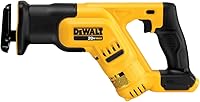
DEWALT Reciprocating Saw: Best for steady corded cutting at a bench or wall

- 10 amp motor
- 0-2,800 SPM
- 1-1/8 in stroke length
- 4-position keyless blade clamp
- Variable speed trigger
- 7.3 lb
A corded saw that keeps full cutting power all day. The 4-position clamp lets you turn the blade for flush cuts, and the trigger gives you fine speed control.
Pros
- 10 amp motor keeps its power through long cuts
- 4-position clamp allows flush cutting
- Variable speed trigger for controlled starts
- Keyless lever-action blade changes
- 3 year manufacturer warranty
Cons
- Cord limits where you can work
- 7.3 lb is heavy to hold overhead
- 19.25 in long, so it needs bench room
The score weighs specs, features and how well the saw fits what you're shopping for. For a corded saw at this level, the motor and clamp do the heavy lifting.
The 10 amp rating tells you the saw is built for heavy-duty applications rather than light trim work. That power stays constant for as long as the trigger is held, which is the core reason to choose a corded saw over a battery model.
A cordless saw's output depends on the battery pack and its charge level; the DWE304's does not.
The 1-1/8 in stroke length is the other headline figure. It matches the stroke on DeWalt's compact cordless models, and that longer travel moves the blade further on each pass so chips clear and the cut advances faster.
On pipe and thick timber, that means fewer passes and less heat in the blade.
The 4-position keyless lever-action clamp rounds out the package. It lets you rotate the blade into four orientations without tools, which is what opens up flush cutting.
That single feature separates the DWE304 from saws with a fixed blade seat. The 19.25 in overall length is long for a hand-held saw, so it's happiest on a bench where there's room behind the cut.
Who the DWE304 suits
Buy it if your cutting happens in a garage, workshop or yard near power. Long sessions cutting pipe, timber and nails are where the corded motor holds its speed without a battery fading.
Skip it if you cut overhead, in a loft or between studs. The 7.3 lb body and 19.25 in length are hard to hold at arm's length, and the cord becomes a trip hazard in cramped spaces.
It's also a sensible choice for anyone who already owns a good extension lead and a bench vise. The saw does its best work when the material is clamped and the cut is planned, because the operator isn't fighting the tool's weight and the cord at the same time.
A two-handed grip close to the body lets the 10 amp motor carry the cut.
Who should buy the DeWalt DWE304?
The DWE304 suits the home DIYer or workshop owner who cuts near an outlet and wants one saw for many jobs. Its 10 amp motor is built for heavy-duty work, and the variable speed trigger lets you start a cut slowly in delicate material.
It's a good fit for cutting PVC and copper pipe to length, trimming studs and breaking down pallets. The 4-position clamp adds flush cutting, so you can slice a pipe close to a wall or floor.
Renters who work in a shared yard should think about the cord. A long extension lead solves reach, but you'll still be dragging it across the ground and coiling it up after.
Owners of battery platforms may prefer to stay cordless. The DeWalt Atomic vs XR comparison helps you pick between the two cordless options before you commit to the DWE304.
The variable speed trigger is what makes the DWE304 usable across materials rather than just demolition. Starting slow lets the blade bite into smooth metal or tile without skidding, and squeezing further brings the full 0-2,800 SPM into play once the cut is tracking.
That range covers the light touch a trim cut needs and the aggressive pace a pallet breakdown wants.
The specs that matter in daily use
The 10 amp motor, 0-2,800 SPM and 1-1/8 in stroke are the three numbers that shape how the DWE304 cuts. Together they give fast, aggressive cutting in wood and steady progress through metal.
| Spec | DeWalt DWE304 |
|---|---|
| Power source | Corded Electric |
| Current rating | 10 A |
| Strokes per minute | 0-2,800 |
| Stroke length | 1-1/8 in |
| Blade clamp | 4-position keyless lever-action |
| Weight | 7.3 lb |
| Length | 19.25 in |
| Warranty | 3 year manufacturer warranty |
The stroke length matters more than the top speed for most jobs. A longer stroke clears chips from the cut and moves the blade further each pass, so you spend less time sawing at one spot.
The variable speed trigger lets you dial back for a clean start in tile or thin metal, then increase speed once the blade is tracking. The 4-position clamp is the feature to check first if you cut pipe or trim flush, since turning the blade flat against a floor or wall keeps the saw body clear of the surface.
The 18 tooth count points to a general-purpose cut. Fewer teeth clear chips faster in softwood, while more teeth leave a smoother edge in metal and pipe.
Matching the blade to the material matters as much as the saw's motor rating, so treat the 18 tooth blade as a starting point and build a small set for the jobs you do most. The 7.3 lb weight is steady on a bench and adds control when the blade meets resistance, but it is tiring to hold overhead.
Plan cuts so the work surface carries some of the load where you can.
Setting up the DWE304 for a clean cut
Set up the saw around the blade and the material, not the other way around. Pick a blade for the material, lock it in the clamp position that keeps the shoe flat, then adjust speed to match.
Start with blade choice. An 8 in high speed steel blade with 18 teeth suits general wood and light metal cutting.
For pipe and bolts, a finer metal blade leaves a cleaner edge than a coarse wood blade. Load the blade with the keyless lever clamp and check it seats firmly.
The 4-position clamp lets you rotate the blade to suit flush cuts, so set that before you power on. Set the shoe against the work so the blade enters at a shallow angle; a shoe held flat reduces vibration and helps the blade track straight.
Then squeeze the trigger slowly. The variable speed lets you start at low speed to score the line, then ramp up for the main cut.
A slow start stops the blade from jumping on smooth metal or tile.
The 19.25 in length changes how you set up a bench. Leave clearance behind the cut for the body of the saw, and clamp the material so it can't shift once the blade starts moving.
A loose workpiece is the most common cause of a wandering cut. Route the cord behind you and away from the cut line so it doesn't snag the shoe or pull the saw offline mid-cut.
A lead that's long enough to reach without tension removes one more thing to think about while you work.
Blade changes and routine care
Keep the DWE304 cutting straight by changing blades when they dull and clearing chips from the clamp. The keyless lever-action clamp makes swaps quick, so there's no excuse for pushing a worn blade.
Dull blades heat up and wander offline. Swap to a fresh one when cuts start smoking or need more pressure than before.
The lever clamp opens without tools, so a change takes seconds. Clear sawdust and metal chips from the clamp after each session.
Debris in the seat stops the blade sitting square, which shows up as a curved cut. Wipe the body and cord with a dry cloth and check the cord for nicks before each use.
Store the saw with the blade removed or guarded so the teeth don't catch on other tools.
DeWalt backs the DWE304 with a 3 year manufacturer warranty. Keep the receipt and model number safe, and read the coverage terms so you know what's included before a repair.
Because the blade can sit in four positions, check that the lever locks firmly in each one after cleaning. A clamp that seats loosely lets the blade rock, and a rocking blade cuts slowly and wears its teeth unevenly.
Keep a small set of blades sorted by material so you're not hunting for the right tooth count when a job starts.
The trade-offs of a corded saw
The DWE304's main trade-off is the cord, which limits reach and adds a trip hazard in tight spaces. The 7.3 lb weight and 19.25 in length also make it a two-hand tool for most cuts.
Corded power is the upside. You never stop to swap a battery or wait for a charge, so a long session keeps the same 10 amp output from first cut to last.
The weight is real when you cut overhead or at arm's length. Hold the saw close to your body and let the blade do the work rather than forcing it.
The length matters at a bench. The 19.25 in body needs clearance behind the cut, so plan the work area before you start.
If you're weighing a hand tool for the same jobs, reciprocating saw vs hacksaw for pipe and bolts explains when each one wins.
The trigger's variable speed also means there's a learning curve. A heavy saw at full speed takes concentration to keep straight, so spend a little time at low speed in scrap material before you cut something that matters.
If your work is stationary and near power, the cord costs you little. If your work moves around a site or up a ladder, the same cord becomes the reason to look elsewhere.
The DWE304's job is steady cutting in one place, and it does that job without a battery in sight.
Alternatives worth a look
If the cord is a problem, the DeWalt cordless models below cut without an outlet but need batteries and a charger. Each one suits a different kind of job.
DeWalt DCS369B Atomic Recip Saw
The Atomic is the saw to pick when you work in tight spots. Its 12.5 in front-to-back length gets between studs and into cabinets, and it's 37% lighter than the DCS367.
A brushless motor and built-in LED round it out for dim work areas. Battery and charger sell separately.
Where the DWE304 is long and heavy, the Atomic is short and light, so it trades the corded motor's constant output for a compact body you can hold and steer with one hand. If your cutting happens above your head or in a cabinet, that difference matters more than raw power.
DeWalt DCS367 XR Compact Recip Saw
The XR is the closest cordless match to the DWE304's cutting character. It shares the 1-1/8 in stroke and the 4-position keyless clamp, so the flush-cutting trick carries over.
Its up to 2,900 SPM deliver aggressive cutting, and the 14.5 in body fits between studs. DeWalt says the brushless motor gives up to 2.5x more runtime than the DC385.
What changes is the power source and the need to keep charged packs on hand. For long sessions away from an outlet, the XR gives up the cord without giving up the stroke.
Battery and charger sell separately.
Ryobi ONE+ 18V Reciprocating Saw
If you already run Ryobi batteries, the Ryobi ONE+ 18V reciprocating saw review covers a budget cordless option. It's worth comparing before you buy into a new battery platform.
Verdict: buy the DWE304 for corded power
The DWE304 is the right buy for home and workshop cutting near an outlet, and its 10 amp motor, 1-1/8 in stroke and 4-position clamp make it a strong all-round corded saw. The cord and 7.3 lb weight are the price you pay for that steady power.
Buy it if your cuts happen at a bench or against a wall within reach of a lead. Pick the Atomic instead for one-handed work in tight spots, or the XR for longer cordless sessions between studs.
If you're still deciding between saw types, reciprocating saw vs jigsaw for DIY cuts helps you match the tool to the job.
Frequently asked questions
Is the DeWalt DWE304 a corded or cordless saw?
It's a corded electric saw that runs on a standard outlet. That means you never stop to swap or recharge a battery, but you need a power lead within reach of the cut.
What blades does the DeWalt DWE304 use?
It takes standard reciprocating saw blades. The DWE304 ships as a bare tool, and DeWalt describes an 18 tooth count, so match the blade type to the material you're cutting.
Can the DWE304 cut flush against a surface?
Yes. Its 4-position keyless lever-action clamp lets you turn the blade to four orientations, so you can set it flat for flush cutting close to a floor or wall.
Should I buy the DWE304 or a cordless DeWalt reciprocating saw?
Pick the DWE304 if your cuts happen near an outlet and you want steady power. Pick the Atomic or XR cordless model if you work in tight spots or away from power, and factor in batteries and a charger.
What is included with the DeWalt DWE304?
The box contains the DWE304 reciprocating saw. DeWalt backs it with a 3 year manufacturer warranty, and the saw weighs 7.3 lb.