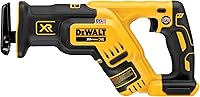
Difference Between DeWalt Reciprocating Saws
The main difference between DeWalt reciprocating saws is how they deliver power. The DWE305 is a 12 Amp corded saw built for steady heavy cutting, while the DCS367 and DCS369B are cordless 20V tools split by size: a compact two-hand model and a one-handed 12.5-inch saw.
On this page (7 sections)
- What are the main types of DeWalt reciprocating saws?
- Corded or cordless: which DeWalt saw fits your work?
- What does the DWE305 12 Amp corded saw do well?
- Which DeWalt cordless saw is more compact?
- How do the blade clamps differ across the three saws?
- How do speed and stroke compare between the models?
- Which DeWalt reciprocating saw should you buy?
The main difference between DeWalt reciprocating saws is how each one gets its power to the cut. The DWE305 is a 12 Amp corded saw made for steady heavy work, while the DCS367 and DCS369B are cordless 20V MAX tools separated by size and reach.
This guide walks through the models most buyers compare and shows which one fits a given job. The goal is simple: pick the saw that matches your work, not the one with the longest feature list.
What are the main types of DeWalt reciprocating saws?
DeWalt builds reciprocating saws in two broad groups: corded models that plug into an outlet and cordless 20V MAX models that run on a battery. Within the cordless group, the saws split again by size, from compact two-hand tools to short one-handed models.
The corded DWE305 draws continuous power from a wall outlet. That makes it a fit for long sessions in one spot, such as a workshop or a remodeling job with an extension cord nearby.
Cordless saws trade that constant power for freedom from an outlet. The DCS367 and DCS369B both use DeWalt's 20V MAX battery platform.
Both are sold as tool only, so the battery and charger are separate purchases.
The three models also differ in blade clamps. The DWE305 and DCS367 use a keyless 4-position blade clamp, which lets you turn the blade for flush cuts.
The DCS369B uses a tool-free blade release for quick changes. For the broader field beyond DeWalt, see our overview of types of reciprocating saws.
Corded or cordless: which DeWalt saw fits your work?
Choose corded when you cut in one place for long stretches and want the steadiest power. Choose cordless when you move between cuts, work overhead or cut where an outlet is out of reach.
The DWE305's 12 Amp motor and 0-2,900 SPM speed give it the strongest power story of the three. It also weighs 8 pounds, so the cord and the motor come with a weight cost.
That weight suits bench and floor work more than overhead work.
Cordless saws shift the trade to the battery. The DCS367 runs a brushless motor with a variable speed trigger up to 2,900 SPM.
DeWalt says its brushless motor provides up to 2.5x longer runtime on average than the DC385 with a DC9096 battery in 2x4 wood. The DCS369B also uses a brushless motor and lists up to 2,800 SPM.
The cordless pair means you buy into the 20V MAX battery line. If you already own DeWalt 20V batteries, the tool-only price makes more sense.
If you don't, budget for batteries and a charger.
What does the DWE305 12 Amp corded saw do well?
The DWE305 is the pick for heavy corded cutting, with a 12 Amp motor, a 1-1/8 inch stroke and a 4-position blade clamp for flush work. It's a straightforward corded saw built for fast, steady material removal.
The variable speed trigger lets you start slow in a cut and ramp up. The 4-position clamp adds range when a flush cut needs the blade turned sideways.
A keyless lever clamp makes blade changes quick when a blade dulls.
This saw weighs 8 pounds and measures 19.38 inches long. That length and weight give you reach and stability in two-hand work, like cutting pipe, breaking down pallets or trimming framing.
It's less comfortable held above your head for long.
The cord is the real limit. You'll want an outlet or an extension cord rated for the saw.
For a shop or garage where the saw stays near power, the DWE305 covers heavy cutting without battery planning.
Which DeWalt cordless saw is more compact?
The DCS367 is the longer two-hand cordless saw at 14.5 inches and about 5.4 pounds, while the DCS369B is the shorter one-handed model at 12.5 inches and 16 ounces. The DCS369B is also 37% lighter than the DCS367, according to DeWalt.
The DCS367's 14.5-inch length is built to fit between studs and into other tight spots. It runs on the same 20V MAX platform and offers a keyless 4-position blade clamp.
A built-in LED light brightens dark work areas, which matters in crawlspaces and closets.
The DCS369B takes compactness further. Its 12.5-inch front-to-back length and 16-ounce tool weight make it a fit for one-handed cuts in tight framing.
It ships with two blades and a belt hook, plus a pivoting shoe that keeps more contact with the work surface.
Who should choose the DCS367?
Pick the DCS367 if you want a compact two-hand cordless saw for stud bays and demolition work. Its 1-1/8 inch stroke matches the corded saw's cutting travel, and the 4-position clamp covers flush cuts.
The extra length over the DCS369B gives you more body to grip in two-hand cuts. Skip it if you mostly cut overhead or one-handed; the shorter, lighter DCS369B handles those better.
Who should choose the DCS369B?
Choose the DCS369B if one-handed reach and low weight decide the job. At 12.5 inches and 16 ounces, it's the saw you can run up a ladder or into a cabinet without fighting the tool's size.
The tool-free blade release speeds up swaps, and the pivoting shoe helps the blade sit flat on uneven cuts. Skip it if you want a longer two-hand grip for heavy cutting; the DCS367 is the better fit there.
Whatever saw you own, our guide on which reciprocating saw blade to use helps match the blade to the material.
How do the blade clamps differ across the three saws?
The DWE305 and DCS367 both use a keyless 4-position blade clamp, while the DCS369B uses a tool-free blade release. The 4-position design does more than hold the blade: it lets you rotate it for flush cuts.
Flush cutting matters when you need the blade close to a floor or wall. A 4-position clamp turns the blade so the saw body stays out of the way.
The DWE305 and DCS367 both offer this.
The DCS369B's tool-free release focuses on fast swaps. It's a one-handed saw, so quick blade changes suit a tool you carry around a jobsite.
Its pivoting shoe adds another point of contact beyond a fixed shoe.
All three saws use standard reciprocating saw blades. If you're unsure how the blade sits in the clamp, our walkthrough on how does a reciprocating saw work covers the cutting motion and clamp action.
And when it's time to change a blade on the cordless pair, see how to put blade in dewalt reciprocating saw.
How do speed and stroke compare between the models?
The DWE305 and DCS367 both list a 0-2,900 SPM top speed and a 1-1/8 inch stroke, so they cut with the same blade travel per stroke. The DCS369B lists up to 2,800 SPM on its variable speed trigger.
Stroke length is the distance the blade moves in each pass. A 1-1/8 inch stroke is a long one for a reciprocating saw, and it helps clear chips and cut faster in wood.
Both the corded and the two-hand cordless saw share that stroke.
All three saws use a variable speed trigger. That lets you start slow on tile or metal and speed up in wood.
The DCS369B gives up a little top speed for its shorter body and lower weight.
The DCS367's brushless motor adds runtime efficiency on battery. The DWE305's corded 12 Amp motor removes battery worries but ties the saw to an outlet.
Which DeWalt reciprocating saw should you buy?
Most buyers should start with the DCS369B if they want a cordless saw for tight, one-handed work, and choose the DWE305 if heavy corded cutting is the main job. The DCS367 sits between them as the two-hand cordless option for stud bays and demolition.
The difference between DeWalt reciprocating saws is easiest to read as a set of jobs. Pick the DWE305 for a shop or garage saw that stays near power and takes long, heavy cuts.
Pick the DCS369B when you cut overhead, up a ladder or in a cabinet and want the lightest tool. Pick the DCS367 when you want cordless freedom but a longer two-hand grip for framing and tear-out.
If you already own DeWalt 20V MAX batteries, the cordless pair costs less to run because the battery and charger carry over. If you don't, add them to the total.
The corded DWE305 sidesteps that cost but needs an outlet or extension cord wherever you cut.
Check the blade clamp before you buy if flush cutting is a regular need. The DWE305 and DCS367 both offer the 4-position clamp.
Then stock a few spare blades so a dull edge doesn't stop the job. Use our blade guide to match the tooth count to wood, metal or demolition work.
Frequently asked questions
Can the DCS367 and DCS369B run on the same 20V batteries?
Yes. Both DeWalt cordless saws are 20V MAX tools sold as tool only, so they accept the same DeWalt 20V MAX batteries and chargers.
The battery and charger are not in the box for either saw.
Which DeWalt reciprocating saw has the longest stroke?
The DWE305 and the DCS367 both list a 1-1/8 inch stroke, so they cut with the same travel per stroke. The DCS369B is the compact one-handed model and is the lightest and shortest of the three.
Do these DeWalt saws come with a blade installed?
The DCS369B ships with two blades and a belt hook. The DWE305 includes the saw and a manual, and the DCS367 includes the saw only, so plan on having spare blades ready.
What is the lightest DeWalt reciprocating saw here?
The DCS369B weighs 16 ounces as a tool only and is 37% lighter than the DCS367. The DWE305 weighs 8 pounds corded, while the DCS367 comes in around 5.4 pounds without a battery.