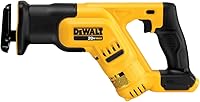
How to Put a Blade in a DeWalt Reciprocating Saw
To put a blade in a DeWalt reciprocating saw, pull the tool-free collar forward and hold it, push the blade shank fully into the slot with the teeth pointing down, then let the collar spring back. Tug the blade to confirm it is locked before you cut.
On this page (9 sections)
- How does the DeWalt blade clamp work?
- How do you remove the old blade first?
- How do you put the new blade in a DeWalt reciprocating saw?
- Which way should the blade face?
- How do you check the blade is locked in?
- Why does the blade keep coming out?
- How do you choose a blade that fits and lasts?
- What should you check before the first cut?
- What else can a reciprocating saw do once the blade is in?
To put a blade in a DeWalt reciprocating saw, pull the tool-free collar forward and hold it, push the blade shank into the slot with the teeth pointing down, then release the collar. Tug the blade to check it is locked before you cut.
The whole job takes seconds once you know which way the blade faces. Getting the blade seated fully is the part that matters most, because a loose blade wobbles, burns the cut and can pop out.
How does the DeWalt blade clamp work?
DeWalt reciprocating saws use a spring-loaded collar that opens the blade slot when you pull it forward. The clamp holds the blade by its shank, not by the teeth.
Pull the collar toward the front of the saw and keep your grip on it. The slot opens and the old blade slides free or the new one slides in.
Release the collar and the spring closes the clamp around the shank.
The clamp grips the blade from the sides, so the blade must sit square in the slot. If it goes in at an angle it may still slide in, but it won't lock properly.
The slot is only wide enough for a standard shank, so a bent one binds before it seats.
This is the same basic mechanism on most modern reciprocating saws, which our guide to how a reciprocating saw works explains in full. A quick look under the nose of your saw shows which type you have before you start.
The older style uses a hex screw instead of a collar, and that one needs a hex key to loosen and tighten.
How do you remove the old blade first?
Pull the collar forward, hold it, and pull the blade straight out of the slot. Wearing gloves helps because used blades are sharp and often hot after cutting.
Switch the saw off and unplug it, or pull the battery pack, before touching the blade. A saw that starts by accident is the main risk in this job.
Hold the collar with one hand and grip the blade near the shank with the other. Pull it out along the slot, not sideways, so you don't bend the clamp jaws.
A blade that fought its way in will often fight its way out, so keep the pull straight and steady.
Put the old blade somewhere it can't cut anyone, not loose in a pocket or on the bench. The storage case in the DeWalt 12-piece set keeps spares and used blades together if you work on site a lot.
The case fits inside a power tool kit box, so the blades travel with the saw rather than in a loose pile.
How do you put the new blade in a DeWalt reciprocating saw?
Pull the collar, push the shank all the way in, and let the collar snap back. The teeth point down in the cutting position.
- Make sure the saw is off and unplugged.
- Pull the blade collar forward and hold it.
- Point the teeth down and line up the shank with the slot.
- Push until the shank stops against the back of the clamp.
- Release the collar and listen for the click.
- Tug the blade away from the saw to confirm it is held.
The push has to go all the way. If the shank stops early, pull it out, check for metal chips or sawdust in the slot, and try again.
A blade that only half seats can feel tight in the hand and still slip once the saw starts moving.
Which way should the blade face?
The teeth point down when the saw is held in a normal cutting position. That holds true whether you are cutting overhead, at waist height or below your feet.
The blade cuts on the pull stroke in most saws, so the teeth face the direction the saw pulls. Flip the saw upside down to look at the slot and you will see the shape of the clamp that only accepts the blade one way.
The shank has a profile that lines up with the slot, so the blade can only go in teeth-down if you hold the saw the right way up.
What matters is where the teeth sit relative to the work. Point them down, or toward the surface being cut, so the saw bites instead of skating.
A blade put in teeth-up will rub and chatter instead of cutting.
Blades come in different types for wood, metal and demolition work. Our guide to which reciprocating saw blade to use helps you pick the right one for the job once the blade is in.
How do you check the blade is locked in?
Tug the blade firmly away from the saw and twist it gently. A properly seated blade won't move, and the clamp should hold it against a hard pull.
If the blade slides out or feels loose, the collar didn't spring back fully or the shank didn't reach the back of the slot. Pull the collar again and reseat it with a firmer push.
Run the saw for a second or two in the air before you start cutting. A blade that is going to slip will usually show it right away, and you'll hear a rattle if it isn't seated.
Keep your hands clear of the blade path while you do this.
After a few cuts, stop and tug the blade again. Heat and vibration can work a blade loose, and a quick check costs seconds.
If it has shifted, reseat it before the next cut rather than pushing through a wobble.
Why does the blade keep coming out?
A blade that keeps falling out usually isn't seated all the way in the clamp. Push it in until it bottoms out rather than until it feels snug.
Debris in the slot is the next most common cause. Metal chips, dried sap and sawdust pack into the clamp and stop it closing fully.
Pull the blade and clean the slot with a brush or a blast of air. On a saw used for demolition, grit from masonry dust is the usual culprit.
A worn clamp is the other possibility. If the collar doesn't spring back with a firm snap, or it moves too freely, the clamp may need attention from a service center.
DeWalt backs its blades with a 3-year warranty on material and workmanship, but the clamp itself is part of the saw, not the blade.
Damaged shanks cause trouble too. A blade whose shank is bent or burred won't sit square, so swap it for a fresh one and the clamp usually grips again.
Blades that have been dropped or forced through a binding cut are the ones most likely to have a bent shank.
How do you choose a blade that fits and lasts?
Buy standard 1/2 inch shank reciprocating saw blades and match the tooth count to the material. Every DeWalt reciprocating saw takes that shank size, and so do most other brands.
For wood and general demolition, a coarse blade with fewer teeth clears chips fast. For metal pipe and sheet, a fine-tooth bi-metal blade cuts cleaner and lasts longer.
Tooth count is the number you look at first, and the material label on the pack is the second.
Bi-metal blades bend without snapping, which matters when a cut binds. That flexibility is the reason most general-purpose blades are bi-metal rather than plain steel.
The cobalt in the edge is what keeps the teeth sharp through harder material.
Which blades suit heavy metal?
For thick metal, pipe and profile, a high tooth count with a cobalt edge holds up better than a general blade. The TOLESA set uses 14 teeth per inch on a 9 inch blade, built for sheet metal, pipe and profile up to the sizes it lists.
The thin wall and set teeth are there to keep heat down during a long cut.
The 1/2 inch shank fits DeWalt and the other major saw brands. If most of your cutting is metal, a pack like this is worth keeping in the case alongside a wood blade.
That way you swap the blade, not the whole kit, when the material changes.
What should you check before the first cut?
Confirm the blade is seated, the material is clamped and the shoe is against the work. A few seconds of setup stops most of the problems people blame on blades.
Set the pivoting shoe flat against the material so the blade doesn't chatter. Clamp the work if you can, because a moving workpiece bends blades and ruins cuts.
Keep the blade clear of nails and screws in reclaimed wood. A bi-metal blade will take a hit or two, but a hardened nail can still strip teeth.
The reinforced teeth on the DeWalt combination blades are made to handle the odd foreign object, not a steady diet of them.
Pick the right blade for the material before you start, and swap it rather than forcing the wrong one. That single habit does more for blade life than any cutting technique.
A short test cut in scrap tells you whether the blade is biting before you commit to the real piece.
What else can a reciprocating saw do once the blade is in?
A reciprocating saw cuts wood, metal, plastic and demolition material, and it reaches places a circular saw can't. The blade change is what lets one tool cover all of it.
Swap between a wood blade, a metal blade and a demolition blade in seconds with the tool-free clamp. That range is why the saw shows up on so many job lists, as our guide to what a reciprocating saw is good for lays out.
Keep a few spare blades in the case and match each to the job. Once you know how to put a blade in a DeWalt reciprocating saw, changing it becomes the easy part of the cut.
Frequently asked questions
Which way does the blade go in a DeWalt reciprocating saw?
The teeth point down when the saw is held in its normal cutting position. The shank pushes in until it stops, and the saw's blade clamp grips it from there.
Do I need a tool to change a DeWalt reciprocating saw blade?
Most DeWalt reciprocating saws use a tool-free clamp, so no wrench is needed. Pull the collar, swap the blade and release.
Some older or basic models use a hex screw, which needs the correct hex key.
Why does my DeWalt reciprocating saw blade keep falling out?
The blade is probably not seated all the way in. Pull the collar fully, push the shank until it bottoms out, and listen for the click.
If it still slips, the clamp may be worn or blocked by debris.
Can I put any brand of blade in a DeWalt saw?
Yes. A standard 1/2 inch reciprocating saw shank fits DeWalt tools, and most aftermarket blades are built to that size.
Match the blade type to the material you are cutting rather than to the saw brand.