9 Best Reciprocating Saws (November 2026)
The best the best reciprocating saws include the DEWALT 20V MAX Reciprocating Saw for most cutting jobs, the DeWalt DCS369B Atomic Recip Saw for one-handed use, and the Milwaukee M18 FUEL Sawzall for heavy demolition.
On this page (4 sections)
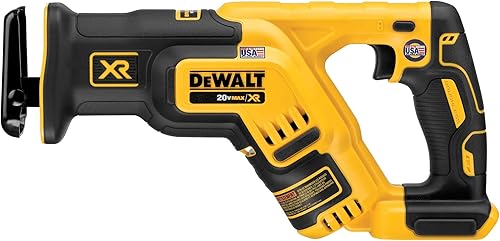
The best reciprocating saw for most people is the DEWALT 20V MAX Reciprocating Saw (DCS380B). It combines a 1-1/8 in stroke for fast cutting with a four-position blade clamp that lets you make flush cuts, and that range covers framing, demolition and remodeling work in one tool.
If you want a saw you can run with one hand, choose the DeWalt Atomic. For heavy demolition, the Milwaukee M18 FUEL Sawzall is the tougher build.
Corded work calls for the Skil.
This guide takes a different cut than a straight list of top-rated saws. Each pick here is matched to a real job: cutting pipe, trimming branches, slicing studs in a wall cavity, or working overhead.
That matters because a reciprocating saw is a family of tools, not one design. A long-stroke full-size saw and a short one-hand saw share a blade clamp and a trigger, but they behave nothing alike in your hands.
Start with our explainer on how does a reciprocating saw work if the stroke and speed numbers are new to you. And if you are still deciding between this family of tools and another, our guide to what is a reciprocating saw good for lays out the jobs it handles best.
Our score weighs specs, features and buyer feedback against what you're shopping for. A saw that wins on one job can fall flat on another, so read the badge before the score.
Our picks at a glance
-
1

-
2

-
3

- 4
 Check it
DeWalt DCS367 XR Compact Recip Saw
Best for cutting between studs - 5
 Check it
Milwaukee 2625-20 M18 Hackzall
Best for overhead and tight spots - 6
 Check it
Skil SPT44A-00 13 Amp Recip Saw
Best for corded power - 7
 Best for one-battery householdsCheck it
- 8
 Best for tight indoor cutsCheck it
- 9
 Check it
Black+Decker BDCR20C Recip Saw Kit
Best for a ready-to-run kit
The best reciprocating saws for each job
Every saw below wins on one clear need, starting with the all-round pick for most readers. Read the badge first, then check the stroke and clamp details for your own work.
The stroke length tells you how much blade travel each pass gets, and the clamp design tells you whether you can cut flush against a surface. Those two specs, more than brand, decide whether a saw fits your jobs.
DEWALT 20V MAX Reciprocating Saw: Best for most cutting jobs
- 1-1/8 in stroke length
- Variable speed trigger to 3,000 SPM
- 4-position keyless blade clamp
- Pivoting adjustable shoe
A long stroke and a four-position clamp cover framing, demolition and flush cuts without a second saw.
Pros
- 1-1/8 in stroke cuts fast
- Four clamp positions allow flush cutting
- Pivoting shoe helps control depth
Cons
- Battery and charger sold separately
The DCS380B suits anyone who wants a single saw to handle framing, demolition and quick remodeling cuts. Its 1-1/8 in stroke moves a lot of blade per pass, and the variable speed trigger runs from a slow start up to 3,000 SPM so you can ease into tile or plastic without stalling.
The four-position keyless clamp is the standout. You can rotate the blade to cut flush against a floor or wall, a job a fixed clamp makes awkward.
The pivoting shoe adjusts for depth of cut and extends blade life, and the rubber overmolded grip keeps control in long sessions. A double oil sealed shaft resists contamination, which is the sort of detail that matters on dusty job sites.
Against the compact Dewalts here, it is the bigger, more capable tool for general work. It is a tool-only purchase, so no blade, battery or charger is in the box; you need a 20V MAX battery on hand.
If you own no 20V MAX batteries yet, add that cost to the comparison.
DeWalt DCS369B Atomic Recip Saw: Best for one-handed use
- 12.5 in front to back
- 37% lighter than the DCS367
- Brushless motor
- LED work light
A compact body that lets you cut overhead or in a cabinet with one hand while the other hand holds the work.
Pros
- Short 12.5 in body
- Weighs about 3.13 lb
- Belt hook and two blades included
Cons
- Smaller stroke than the DCS380B
- Tool only, no battery
The Atomic suits overhead work, cabinet cuts and one-handed use while your other hand steadies the material. At 12.5 in front to back and about 3.13 lb, it is short enough to fit into spots a full-size saw cannot reach.
DeWalt says it is 37% lighter than the DCS367, which matters when you are holding the saw above your head for a long cut. The brushless motor and LED light help in dark crawl spaces, and the pivoting shoe keeps several points of contact with the work.
The variable speed trigger gives you control on start, so you are less likely to jump the blade on a delicate cut.
The trade-off against the DCS380B is stroke and power: the Atomic is built for control and reach, not for the longest, fastest cuts in thick lumber. It tops out at 2,800 SPM and its compact stroke puts less blade into the material per pass.
Two blades and a belt hook come in the box, and the belt hook means you can hang it while you reposition a ladder. That kit of extras makes it an easy grab-and-go saw.
Milwaukee M18 FUEL Sawzall: Best for heavy demolition
- Brushless FUEL motor
- Lever-actuated blade clamp
- Metal reinforced battery connection
- Built-in LED light
A full-size Sawzall built for long demolition days, with a tough clamp and battery mount.
Pros
- Lever clamp speeds blade swaps
- Metal battery connection resists wear
- LED lights the cut line
Cons
- Heavier than the compact picks
- No charger or battery in the box
The M18 FUEL Sawzall is the pick for demolition crews and heavy renovation. Its lever-actuated blade clamp is built to take wear and speeds blade changes, and the metal reinforced battery connection holds up better over years of job site use.
The reinforced mount also helps the battery stay seated when the saw is bouncing through nail-embedded lumber.
Milwaukee's brushless FUEL motor gives it the torque to push through tough material, and the built-in LED lights the cut line when you are working under a floor. It runs up to 3,000 SPM, matching the top of the DCS380B.
The 90-degree cutting angle and rectangular blade shape are standard for the class, but the build around them is aimed at long, hard days.
The trade-off is size and the bare-tool box. You need M18 batteries, and the full-size body is more saw than a trim job needs.
Where it wins is stamina in tough material, and the lever clamp is quicker to work than a keyless twist when your hands are cold or gloved.
DeWalt DCS367 XR Compact Recip Saw: Best for cutting between studs
- 14.5 in compact body
- Brushless motor with 2.5x runtime
- 4-position keyless clamp
- LED light
A compact saw with a full 1-1/8 in stroke, so you get fast cutting in a body that fits between studs.
Pros
- Full stroke in a compact body
- Weighs 5.4 lb tool only
- Four-position blade clamp
Cons
- Larger than the Atomic for one-hand work
The DCS367 XR Compact suits plumbers and electricians who cut between studs. Its 14.5 in length lets it drop into a cavity, while the 1-1/8 in stroke and up to 2,900 SPM give it cutting speed close to the full-size DCS380B.
DeWalt says the brushless motor delivers up to 2.5x more runtime than an older brushed setup, which stretches each battery through a long day. It weighs about 5.4 lb, light enough to control with two hands in a wall.
The pivoting head and LED round out the fit for indoor work, and the surface recommendation is indoor cutting.
Its four-position clamp and LED match the all-round pick. The main trade-off is that the Atomic is smaller and lighter for one-hand work, while this one keeps the full stroke for faster cuts.
If your work is mostly opening walls and cutting pipe inside them, the extra stroke pays off more than the smaller body would. DeWalt lists the DCS367 at 5.4 lb, so plan on two hands for long overhead cuts.
Milwaukee 2625-20 M18 Hackzall: Best for overhead and tight spots
- One-handed design
- Anti-vibration handle
- QUIK-LOK blade clamp
- Built-in LED
A short one-hand saw that keeps vibration down and reaches into spaces a full-size saw cannot.
Pros
- Easy to run one handed
- Anti-vibration handle
- Tool-free blade changes
Cons
- Shorter 3/4 in stroke is slower in thick lumber
The M18 Hackzall suits anyone who works overhead or in tight spots the most: cutting pipe under a sink, trimming a limb, or slicing conduit in a crowded cabinet. Its one-handed design gives control that a standard two-hand saw struggles to match in those places.
The anti-vibration handle is designed to cut fatigue when you rip heavier lumber, and the LED lights the work without shadows for a straight line. The QUIK-LOK clamp changes blades without a tool, and it takes both Sawzall and Hackzall blades.
The M18 platform shares batteries with other Milwaukee tools, and it runs on both compact and XC high capacity packs.
The 3/4 in stroke is the real trade-off. It is easier to steer and gentler in thin material, but it is slower in thick lumber than the 1-1/8 in saws above.
The dual gear anti-vibration system is the feature that makes the one-hand grip practical for long cuts. At 3,000 SPM it is no slouch in light material; the stroke, not the speed, is what holds it back in thick stock.
Skil SPT44A-00 13 Amp Recip Saw: Best for corded power
- 13 amp motor
- BUZZKILL vibration control
- Variable speed trigger
- Tool-free blade clamp
Plug-in power for long demolition runs, with vibration control and an oversize trigger for two-hand work.
Pros
- 13 amp motor never needs a battery
- Skil says BUZZKILL cuts vibration up to 35% better
- Oversize trigger fits multiple grips
Cons
- Cord limits where you can work
- Heavier than cordless picks
The Skil SPT44A-00 suits buyers who want constant power and never want to think about a battery. Its 13 amp motor handles long demolition runs, and Skil says the BUZZKILL system suppresses vibration up to 35% better than the competition.
The oversize trigger lets you grip the saw in several positions, useful when you are cutting at an angle or above your head. A secure tool-less blade clamp holds the blade through harsh job site demands, and the variable speed trigger lets you slow down for plastic or metal.
The ergonomic handle and the plastic, rubber and aluminum grip mix keep it manageable for a two-hand tool.
The trade-off is the cord. You are tied to an outlet or extension lead, and it weighs 9 lb, heavier than the cordless picks.
For a shop or a job with power, it is a powerful, low-maintenance choice. There is no battery to age out and no platform to buy into, so the long-run cost is just blades.
If you cut on a bench most days, that simplicity is worth the cord.
Ryobi ONE+ 18V Recip Saw: Best for one-battery households
- 3,400 SPM variable speed
- 1 in stroke length
- Tool only
- ONE+ 18V battery platform
A fast-stroking saw for anyone already on the Ryobi ONE+ battery platform.
Pros
- High 3,400 SPM top speed
- Shares ONE+ 18V batteries
- Lighter than full-size saws
Cons
- Battery not included
The Ryobi ONE+ PCL515B suits households already on the ONE+ 18V battery platform. Its 3,400 SPM top speed is the highest in this group, so light cuts through lumber and PVC go quickly with a fresh battery.
The 1 in stroke sits between the compact saws and the long-stroke picks, a workable middle for general yard and shop jobs. At about 3.75 lb, it is lighter than the full-size saws, and its 17 in overall length gives it a stable two-hand feel.
It is a tool-only buy, so the value depends on batteries you already own.
The trade-off against the top picks is build and stroke. It does not have the four-position clamp of the Dewalts or the torque of the Sawzall, so treat it as a solid platform saw rather than a demolition tool.
The high stroke count helps in soft material, but stroke count is not stroke length, and thick lumber still favors the 1-1/8 in saws. For a homeowner already on ONE+, though, it is a lower-cost way into a cordless recip saw.
Craftsman V20 Recip Saw: Best for tight indoor cuts
- 14.5 in compact size
- 1 in stroke length
- Variable speed trigger to 3,000 RPM
- Tool-free blade release
A compact V20 saw that slips between studs and handles light indoor cutting.
Pros
- Compact 14.5 in body
- Contoured overmolded handle
- Tool-free blade changes
Cons
- 1 in stroke is shorter than the top picks
The Craftsman V20 CMCS300B suits indoor cuts where a compact body matters. At 14.5 in, it slips between studs and into tight corners, and the variable speed trigger runs to 3,000 RPM for control across different materials.
The contoured overmolded handle adds comfort in odd orientations, and the tool-free blade release makes swaps quick. It is part of the V20 system, so it shares batteries with other Craftsman tools.
It also works with the VERSATRACK wall organization system, which is handy if your shop already runs that setup. A 6 in blade and 1 in stroke keep it aimed at light work.
The trade-off is the 1 in stroke. It is shorter than the 1-1/8 in Dewalts, so long, fast cuts in thick lumber take longer.
For light remodeling and indoor work, though, the size is an advantage. The 4.4 lb weight is light enough to hold up to a ceiling cut for a short stretch.
Think of it as the saw for a stud wall or a closet shelf, not a deck teardown.
Black+Decker BDCR20C Recip Saw Kit: Best for a ready-to-run kit
- 20V MAX battery and charger included
- Tool-free blade change
- Pivoting shoe
- Variable speed trigger
The only pick here that arrives with a battery and charger, so it cuts on day one.
Pros
- Battery and charger in the box
- Tool-free blade changes
- Pivoting shoe for control
Cons
- Least powerful of the group for heavy demolition
The Black+Decker BDCR20C is the only pick here that arrives complete with a 20V MAX battery and charger, so it is ready to cut on day one. That makes it the natural pick for a first saw or an occasional user.
The 3,000 SPM motor, variable speed trigger and electric brake help control. A tool-free blade change and pivoting shoe add convenience, and it weighs about 4.5 lb, light for a cordless saw.
The kit also includes a reciprocating blade, so there is nothing else to buy before the first cut.
The trade-off is power for heavy demolition. Against the Sawzall or the DCS380B, it is a lighter-duty tool.
For trimming, pruning and odd jobs around a house, though, the kit value is hard to beat. The 2 year limited warranty is shorter than the 3 year cover on the Dewalts, which is worth noting if you plan to use it hard.
For a first saw that has to work out of the box, it stays the simple answer.
How the best reciprocating saws compare
The table below lines up the picks by stroke, top speed and power source. Use it to match a saw to the material you cut most, then read the section that fits your job.
| Product | Best for | Stroke | Top speed | Power | Our score |
|---|---|---|---|---|---|
| DEWALT 20V MAX Reciprocating Saw | most cutting jobs | 1-1/8 in | 3,000 SPM | Cordless, tool only | 9.7 |
| DeWalt DCS369B Atomic Recip Saw | one-handed use | 2,800 SPM | 9.2 | ||
| Milwaukee M18 FUEL Sawzall | heavy demolition | 3,000 SPM | Cordless, bare tool | 9.1 | |
| DeWalt DCS367 XR Compact Recip Saw | cutting between studs | 1-1/8 in | 2,900 SPM | 9.0 | |
| Milwaukee 2625-20 M18 Hackzall | overhead and tight spots | 3/4 in | 3,000 SPM | Cordless, bare tool | 8.5 |
| Skil SPT44A-00 13 Amp Recip Saw | corded power | 13 amp corded | 8.3 | ||
| Ryobi ONE+ 18V Recip Saw | one-battery households | 1 in | 3,400 SPM | Cordless, tool only | 8.0 |
| Craftsman V20 Recip Saw | tight indoor cuts | 1 in | 3,000 RPM | 7.9 | |
| Black+Decker BDCR20C Recip Saw Kit | a ready-to-run kit | 3,000 SPM | Cordless kit | 7.7 |
The long-stroke saws (DCS380B, DCS367, Skil) win on raw cutting speed in lumber and demolition. The short-stroke and one-hand saws win on control overhead and in tight spots.
Cordless picks trade a battery for freedom of movement, while the corded Skil trades range for constant power. Weight tracks the same split: the one-hand saws land near 3 lb, the compacts around 4 to 5 lb, and the corded Skil at 9 lb.
That difference shows up fastest when you are holding the tool up rather than cutting at waist height.
What should you check before buying a reciprocating saw?
Start with the stroke length and the blade clamp, because those two specs decide what the saw can cut and how fast. Then match the battery platform to tools you already own.
A saw on a platform you already use costs less in total than a bargain tool that needs a new battery and charger.
How much does stroke length matter?
A 1-1/8 in stroke like the DCS380B or DCS367 cuts fast because each pass removes more material. That suits lumber, demolition and pipe where speed counts.
A 3/4 in stroke like the Hackzall is easier to control and gentler in thin metal, so it handles overhead work and detail cuts better. A 1 in stroke sits in the middle and suits general light work.
Stroke length is not the same as stroke count. A 3,400 SPM saw with a 1 in stroke can trail a 2,900 SPM saw with a 1-1/8 in stroke in thick lumber, because each pass bites deeper.
Check both numbers, not just the speed.
Do you need a four-position blade clamp?
A four-position clamp lets you turn the blade sideways to cut flush against a floor, wall or ceiling. If you install flooring, trim or plumbing, that feature saves a second tool.
The DCS380B and DCS367 both give you the four positions.
For rough demolition in open space, a standard clamp is fine. A lever clamp like the one on the Sawzall is quicker to work than a keyless twist, which helps when you swap blades often.
The Hackzall's QUIK-LOK and the Craftsman's tool-free release cover the same ground for one-hand and light work.
When is cordless the better choice?
Cordless saws like the DCS380B, Atomic and Sawzall free you from an outlet, which matters on a ladder, in an attic or out in a yard. The trade-off is the battery buy and the runtime.
A corded saw like the Skil SPT44A-00 never runs flat and delivers steady power, so it suits a shop or a job with reliable power. If you already own tools on a battery platform, a bare tool is often the cheaper way in.
If you own none, a kit like the Black+Decker is the lower-risk first buy.
Does the blade matter as much as the saw?
Yes. The wrong blade makes even a strong saw cut slowly.
Match the teeth to the material: coarse teeth for wood, finer teeth for metal and PVC, and a pruning blade for limbs. Most picks here list a 24-tooth blade, which is a general-purpose count for wood and demolition.
Our guide to the best Makita reciprocating saw is worth a read if you are comparing platforms before you buy.
Which reciprocating saw is right for your work?
Match the saw to the job you do most. For overhead or tight work, the one-hand Hackzall or the Atomic earns its place.
For lumber and demolition, go long-stroke. For a shop bench with steady power, the corded Skil removes the battery question entirely.
For general remodeling and a single do-it-all saw, the DEWALT 20V MAX DCS380B is the answer to what is the best reciprocating saw for most people, thanks to the 1-1/8 in stroke and the four-position clamp. If you already own Milwaukee batteries, the M18 FUEL Sawzall is the heavy-duty pick.
If you want the middle ground of a compact body with a full stroke, the DCS367 is the one to weigh against the all-rounder.
For a first saw on a budget, the Black+Decker kit gets you cutting without buying batteries. For steady power at a bench or job site, the Skil is the corded route.
On the Ryobi ONE+ platform, the PCL515B is the low-cost way into cordless cutting if the batteries are already in your garage.
Whichever you choose, buy the blades for your material and keep the clamp clean. For pruning work in the yard, our guide to the best reciprocating saw for pruning covers blades and technique in more detail.
Our top 3 picks at a glance
-
1
-
2
-
3
Frequently asked questions
What is the best reciprocating saw for most people?
The DEWALT 20V MAX DCS380B is the best pick for most people. Its 1-1/8 in stroke cuts fast, and the four-position blade clamp lets you make flush cuts that a fixed clamp cannot handle.
Do I need a cordless or a corded reciprocating saw?
Pick cordless if you work in attics, on ladders or away from outlets. Pick corded like the Skil SPT44A-00 if you want steady power for long demolition sessions and never want to swap a battery.
What stroke length should a reciprocating saw have?
A 1-1/8 in stroke cuts fast in lumber and demolition but is harder to control in thin material. A 3/4 in stroke like the Milwaukee Hackzall is easier to steer overhead and in tight spots.
Can a reciprocating saw cut tree branches?
Yes, with a pruning blade fitted. A one-hand saw like the Hackzall is easiest to hold up to a limb.
For more on blades and technique, see our guide to the best reciprocating saw for pruning.
What does tool only mean on a reciprocating saw?
Tool only means you get the saw without a battery or charger. Buy it only if you already own batteries on that platform.
The Black+Decker BDCR20C kit is the exception here and includes both.


